India produces over 10 million graduates every year. The 2024 India Skills Report pegs overall employability at 51.25%, with engineering graduates at a dismal 3.84% for core engineering roles. These numbers have been roughly stable for a decade, which means the education system's response to the employability crisis has been approximately zero. NEP 2020 mandated competency-based education and career guidance from Class 6. Two years later, only 12% of schools have implemented any form of structured career guidance program.
The gap between mandate and implementation is not primarily financial. It is infrastructural. Most schools have no trained career counselor, no assessment tools, no framework for mapping student aptitudes to career paths, and no mechanism to track whether their guidance actually improved outcomes. The annual "career day" where parents talk about their jobs is not career guidance. It is a checkbox. Students need psychometric data about their own personality, aptitude, and interests, mapped against 1,500+ career paths, not a 45-minute talk from someone who happens to be an engineer.
Schools that have implemented structured psychometric career guidance report measurable changes. A network of 34 CBSE schools that deployed Brainwave assessments for Classes 8-10 found that subject-aptitude alignment improved 2.3x, meaning students were choosing streams that matched their measured cognitive strengths rather than defaulting to whatever their peer group chose. Nirmal Bhartia School and DL DAV School both report that parent satisfaction with career guidance increased significantly when recommendations were data-backed rather than anecdotal.
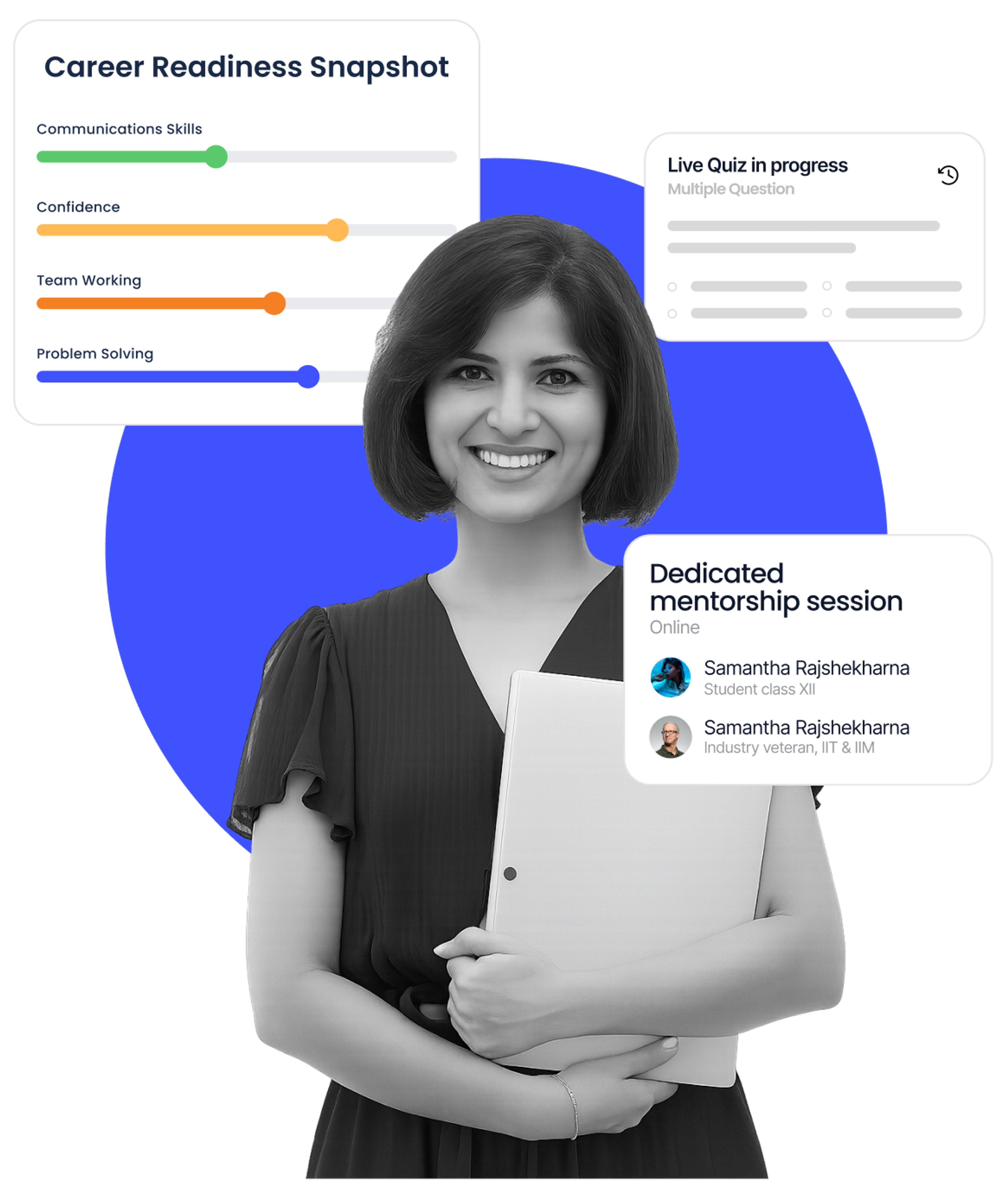
At the university level, the challenge shifts from awareness to readiness. Graduates do not just need to know what career they want. They need demonstrable skills, interview confidence, and professional credentials that employers trust. The institutions seeing the strongest placement improvements are those deploying skill benchmarking tools that measure students against industry competency frameworks, not just academic syllabi. Interview readiness programs, mock interviews, communication assessments, personalized feedback, address the soft-skill gap that employers consistently cite as their primary concern.
Digital credentialing is an underappreciated lever. When a university issues verified digital badges and micro-credentials for skill programs, blockchain-verifiable, LinkedIn-shareable, it transforms extracurricular development from invisible effort into portable, visible proof. Students build a digital portfolio that complements their degree. Employers see granular capability data beyond the binary signal of a GPA. A Tamil Nadu university consortium that implemented assessment-driven career readiness saw placement rates improve 18% in the first year.
The institutions that will thrive are not those with the biggest campuses or most famous alumni. They are the ones building systematic career readiness infrastructure: psychometric assessments starting in school, skill benchmarking in college, digital credentials that travel with the student, and mentorship networks that connect classrooms to boardrooms. The employability gap is not inevitable. It is a measurement gap, and it closes when institutions stop guessing and start measuring.