Artificial intelligence in education is no longer a futuristic concept. It is already in classrooms across India and the world. But the real impact is not about replacing teachers with robots. It is about augmenting what educators can do, giving them tools that personalise learning at a scale that was previously impossible. Here are three concrete ways AI is transforming the educational experience in 2026.
First, adaptive assessments. Traditional exams give every student the same questions and measure performance on a single curve. AI-powered psychometric assessments adapt in real time, adjusting question difficulty based on responses. This means a student who struggles with spatial reasoning gets follow-up questions that pinpoint exactly where the gap lies, while a student who excels moves to higher-order challenges. The result is far richer data about each student and a fairer evaluation system.
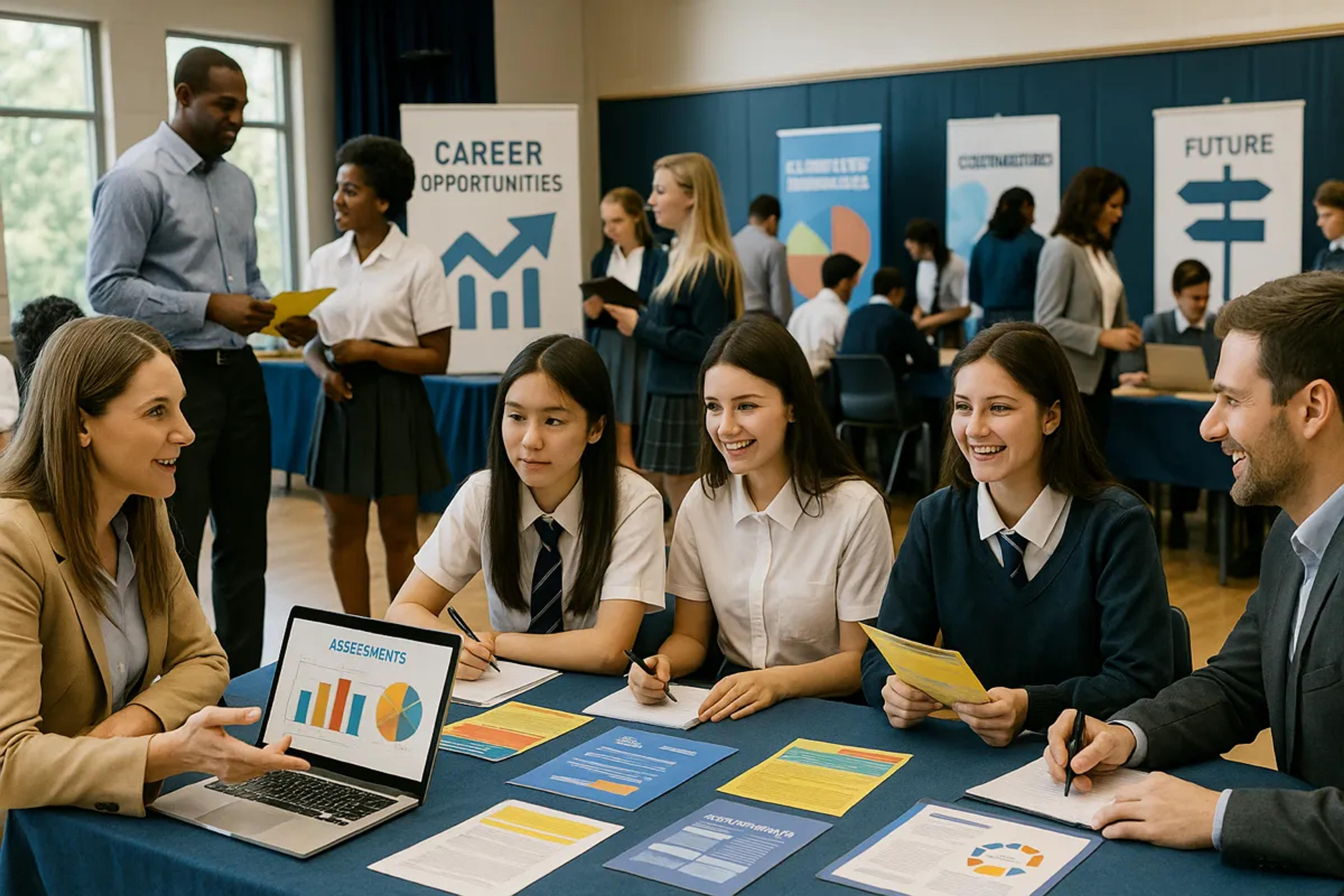
Second, personalised career pathways. AI analyses assessment results alongside labour market data, university admission trends, and scholarship databases to generate career roadmaps that are unique to each student. A student interested in healthcare but with strong creative aptitude might be guided toward biomedical illustration or health communication, paths a generic career counselling session might miss entirely.
Third, real-time educator dashboards. AI aggregates student data into actionable insights for teachers and counsellors. Instead of waiting for end-of-term reports, educators can see which students need intervention now, which career interest clusters are emerging in a cohort, and how engagement metrics correlate with assessment performance. The classroom becomes data-informed without becoming data-obsessed.