3D Artist
Also known as: 3D Modeler, 3D Animator, Digital Artist, CG Artist
A 3D Artist is a creative professional who designs and builds three-dimensional models, characters, environments, and visual effects for various media, including video games, films, advertisements, and virtual reality. They use specialized software to transform concepts into believable digital assets, focusing on aspects like modeling, texturing, lighting, and rendering to achieve a desired aesthetic and meet technical requirements.
5
Skills to Learn
4
Career Levels
10
Top Companies
3
Education Paths
Sneak Peek
Have you ever marveled at the realistic characters in video games or the breathtaking special effects in movies? What if you could be the one to bring those digital worlds to life? A 3D Artist is a visual magician, shaping imagination into tangible 3D creations.
What does a 3D Artist do?
A 3D Artist is a creative professional who designs and builds three-dimensional models, characters, environments, and visual effects for various media, including video games, films, advertisements, and virtual reality. They use specialized software to transform concepts into believable digital assets, focusing on aspects like modeling, texturing, lighting, and rendering to achieve a desired aesthetic and meet technical requirements.
- Salary in India
- ₹3.5 to ₹12 lakh a year
- Demand
- Growing
- Remote work
- Hybrid
- Industry
- Entertainment, Technology, Design Studios
Is This Career For You?
Discover if your personality matches this career
Your Personality Fit (RIASEC)
You enjoy creative expression, visual design, and bringing imaginative concepts to life through digital art.
You like exploring how things work, solving technical challenges, and delving into the details of digital creation.
You enjoy working with tools and technology to build tangible or digital creations, transforming ideas into visual reality.
You appreciate structured processes, attention to detail, and following technical specifications to achieve a polished result.
You are motivated by projects that allow for creative leadership and bringing innovative visual ideas to clients or audiences.
While collaboration is part of the role, your primary drive comes from creation rather than direct interpersonal service.
You'll Love This Career If...
Like what you see? Get full access.
Save this career, compare with others, and get your personalized career plan.
50,000+ students already signed up
A Day in the Life
What your typical workday looks like
Imagine starting your day by reviewing concept art for a new character, then diving into 3D software to sculpt its form, carefully adding textures to make it look realistic, and finally setting up lights to make it pop. You might spend the afternoon collaborating with a team to integrate your work into a game or animation, getting feedback, and making adjustments to ensure everything looks perfect.
Myth vs Reality
Tap to reveal the truth behind common misconceptions
Skills You'll Need
Master these to excel in this career
Technical Skills
2Proficiency in 3D Software
Mastery of tools like Blender, Maya, or 3ds Max.
Understanding of Animation Principles
Knowledge of how to create realistic and engaging animations.
Soft Skills
2Communication Skills
Ability to convey ideas and take feedback effectively.
Team Collaboration
Skill in working with other artists and designers.
Domain Skills
1Strong Portfolio
A collection of varied and impressive 3D art pieces.
Tools of the Trade
Software and tools you'll work with daily
Software
Blender
A free and open-source 3D creation suite, great for modeling, sculpting, animation, and rendering, suitable for beginners and professionals.
Autodesk Maya
An industry-standard software widely used in film and game development, known for its powerful animation and rigging tools.
ZBrush
A specialized digital sculpting tool used for creating highly detailed organic models, perfect for characters and creatures.
Substance Painter
A powerful tool for creating realistic textures and surface details, allowing artists to paint directly onto 3D models.
Platform
Unreal Engine
A real-time game engine used for developing interactive experiences and increasingly for film and visualization, integrating art assets.
ArtStation
A leading online platform for creative professionals to showcase portfolios, connect with peers, and find job opportunities.
Want to build these skills?
Get a personalized learning roadmap and save careers that match your profile.
50,000+ students already signed up
Your Learning Path
Step-by-step guide to getting started
Master the Basics of 3D Art Principles
Start by understanding fundamental art concepts like form, light, color, and composition. Learn about the 3D space, basic terminology (vertices, edges, faces), and how to think spatially. This foundation is crucial before diving into software.
Learn Foundational 3D Software
Begin with a versatile and accessible software like Blender. Focus on learning its core modeling tools to create simple objects, then explore basic texturing and rendering to bring them to life. Follow beginner tutorials and practice regularly.
Explore the 3D Pipeline and Specialization
Understand the complete 3D workflow: modeling, texturing, lighting, and rendering. As you progress, identify areas you enjoy most, such as character modeling, environment design, or hard surface modeling, and begin to specialize.
Build Your Portfolio and Network
Create polished projects showcasing your skills and chosen specialties. Share your work on platforms like ArtStation, seek feedback from online communities, and start connecting with other artists and industry professionals.
Career Progression
How your career will grow over time
Junior 3D Artist
EntryA Junior 3D Artist assists in creating 3D models, textures, and scenes, following guidelines and learning the production tools and pipelines.
- Assisting in creating 3D models from concept art
- Learning and applying basic texturing techniques
- Following established pipelines and workflows
- Collaborating with senior artists for feedback and guidance
Mid-Level 3D Artist
Mid-LevelA Mid-Level 3D Artist takes ownership of assets, refines techniques, and begins to mentor junior artists.
- Creating and refining 3D models and textures
- Optimizing assets for performance
- Collaborating with art directors and animators
- Mentoring junior artists and providing feedback
Senior 3D Artist
SeniorA Senior 3D Artist leads asset creation, sets technical standards, and may work on high-profile projects.
- Leading the creation of high-quality 3D assets
- Establishing technical standards and workflows
- Collaborating with cross-functional teams
- Presenting work to stakeholders and clients
Lead 3D Artist
LeadershipA Lead 3D Artist oversees the entire 3D art department, makes high-level decisions, and ensures visual consistency across projects.
- Overseeing the 3D art department
- Making strategic decisions about art direction and technology
- Ensuring visual consistency and quality across projects
- Mentoring and leading a team of 3D artists
Education Paths
Post-Secondary Certificate/Diploma
Diploma in 3D Art or Animation
3D Art
Bachelor's Degree
Bachelor's in Computer Graphics, Animation, or Fine Arts
Computer Graphics or Animation
Professional Degree
Master's in Fine Arts or Computer Graphics
Fine Arts or Computer Graphics
Top Hiring Companies
Salary & Future Growth
What you can earn and where the industry is headed
Salary Progression (INR)
Future Career OutlookCurrent Market: Growing
3D modeling is a foundational tool across many industries, including entertainment, architecture, healthcare, and manufacturing. Advancements in software and computing power have made it more accessible and powerful than ever before.
The integration of AI, real-time rendering, and immersive technologies like AR and VR will continue to revolutionize 3D modeling. Expect more automation in tasks, AI-assisted design, and increasingly sophisticated virtual prototyping and visualization capabilities. Cloud-based platforms will enhance collaboration.
3D modeling will become even more integrated into our daily lives, enabling hyper-personalized solutions in healthcare, advanced virtual worlds, and more efficient manufacturing processes. The boundaries between the digital and physical will continue to blur, driven by ongoing technological innovation.
Not sure if 3D Artist is right for you?
Talk to a Stride counsellor for personalised guidance on whether this career fits your interests, strengths, and goals.
Watch & Learn
Curated videos to help you explore


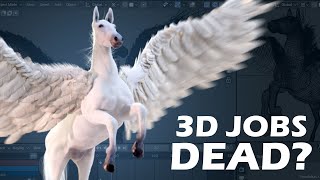

Helpful Resources
Articles and guides for deeper learning
Frequently Asked Questions
Quick answers to common questions
QWhat is a 3D Artist?
A 3D Artist is a professional who creates three-dimensional models, characters, environments, and visual effects using specialized software for various industries like gaming, film, architecture, and healthcare.
QWhat kind of software do 3D Artists use?
Common software includes Autodesk Maya and Blender for general 3D modeling and animation, Fusion 360 for product design and engineering, and SketchUp for architectural and interior design.
QWhat are the future trends in 3D modeling?
Key trends include the integration of AI and machine learning for automation and predictive design, real-time rendering for faster visualization and virtual prototyping, and the growth of cloud-based platforms for enhanced collaboration.
Explore All 1,500+ Careers
Browse our full career explorer or take an assessment to get personalised recommendations.