Environmental Engineer
Also known as: Environmental Engineering
Environmental engineers are the problem-solvers for our planet. They use their knowledge of science and math to tackle challenges like pollution, climate change, and waste management. By collecting data, analyzing its impact, and developing solutions, they work to protect our environment and create more sustainable systems for industries and communities.
6
Skills to Learn
5
Career Levels
3
Top Companies
2
Education Paths
Sneak Peek
Do you dream of a world with cleaner air, purer water, and a healthier planet? Are you passionate about using science and technology to solve real-world environmental problems?
What does an Environmental Engineer do?
Environmental engineers use science and math to solve environmental problems like pollution, climate change, and waste management. They design solutions, evaluate impacts, and ensure sustainable practices.
- Salary in India
- ₹5 to ₹15 lakh a year
- Demand
- Growing
- Remote work
- Hybrid
- Industry
- Information Technology
Is This Career For You?
Discover if your personality matches this career
Your Personality Fit (RIASEC)
You enjoy solving complex problems and finding answers through research and analysis.
You like working with your hands, tools, and machinery, and enjoy practical, hands-on tasks.
You are motivated by helping people and enjoy working in collaborative environments.
You appreciate structure and order, which can be helpful in following regulations and procedures, but the investigative nature is more dominant.
You might enjoy leading projects, but the core of this role is less about sales or management and more about technical problem-solving.
You prefer creative expression and may not find traditional engineering roles aligned with this.
You'll Love This Career If...
Like what you see? Get full access.
Save this career, compare with others, and get your personalized career plan.
50,000+ students already signed up
A Day in the Life
What your typical workday looks like
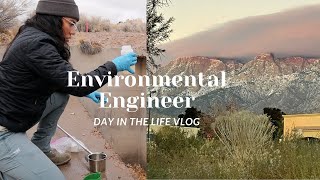
Imagine a day where you might be out in the field, collecting samples from a river to check for pollutants, or in the office, analyzing data from air quality monitors. You could be designing a new system to treat wastewater, creating a plan to clean up a contaminated site, or meeting with community leaders to discuss a new recycling program. Every day brings new environmental puzzles to solve!
Myth vs Reality
Tap to reveal the truth behind common misconceptions
Skills You'll Need
Master these to excel in this career
Technical Skills
4Problem-Solving
Skill in identifying environmental issues and developing effective solutions.
Investigative Skills
Ability to research and analyze environmental data to determine the best course of action.
Analytical Skills
Proficiency in analyzing large data sets to understand environmental issues.
Report-Writing
Skill in drafting detailed reports on environmental findings and solutions.
Soft Skills
2Communication
Ability to clearly convey complex ideas and solutions to diverse stakeholders.
Leadership
Ability to lead and coordinate diverse project teams.
Tools of the Trade
Software and tools you'll work with daily
Software
CAD Software
Used for designing systems like water treatment plants or pollution control equipment.
GIS Software
Helps in analyzing spatial data for environmental impact assessments and site planning.
Mathematical Modeling Software
Used to simulate environmental processes and predict the impact of engineering solutions.
Project Management Tools
Software to help plan, execute, and monitor environmental engineering projects.
Hardware
Water Quality Testing Kits
Tools used to measure the quality of water in rivers, lakes, and wastewater.
Air Samplers
Devices used to collect air samples for analyzing pollutants.
Want to build these skills?
Get a personalized learning roadmap and save careers that match your profile.
50,000+ students already signed up
Your Learning Path
Step-by-step guide to getting started
Build a Strong Foundation in Science and Math
Focus on courses like algebra, calculus, chemistry, and physics in high school. These subjects are the building blocks for understanding environmental engineering principles.
Earn Your Bachelor's Degree
Pursue an ABET-accredited bachelor's degree in Environmental Engineering or a related field like Civil Engineering. Look for programs with co-op opportunities to gain practical experience.
Gain Practical Experience and Consider Licensure
Work under a licensed Professional Engineer (PE) to gain on-the-job experience. Prepare for and pass the Fundamentals of Engineering (FE) exam to become an Engineer in Training (EIT).
Specialize and Advance Your Career
Consider a Master's degree for specialized knowledge in areas like water resources or air pollution control. Continue gaining experience, pursue professional licensure (PE), and explore advanced certifications.
Career Progression
How your career will grow over time
Engineer-in-Training
EntryThe initial role where new environmental engineers apply their academic knowledge to real-world projects under the guidance of experienced professionals.
- Assist in project design and implementation
- Conduct environmental assessments
- Support data collection and analysis
Assistant Engineer
EntryA role where environmental engineers take on more responsibility, working on projects aimed at protecting the environment and managing waste.
- Lead small projects
- Develop environmental management plans
- Ensure compliance with environmental regulations
Project Engineer
Mid-LevelA position where environmental engineers manage larger projects, focusing on environmental protection, waste management, water purification, and air pollution reduction.
- Oversee project execution
- Coordinate with cross-functional teams
- Report project progress and outcomes
Senior Engineer
SeniorA role where experienced environmental engineers specialize in areas like hazardous waste management, sustainable construction, or water resource management.
- Lead specialized projects
- Mentor junior engineers
- Contribute to strategic planning
Principal Engineer
LeadershipA top-level position where environmental engineers lead departments or divisions, overseeing major projects and contributing to organizational strategy.
- Direct engineering teams
- Drive innovation in environmental solutions
- Represent the organization in industry forums
Education Paths
Bachelor's Degree
B.Tech/B.E.
Environmental Engineering or related field
Master's Degree
M.Tech/M.E.
Environmental Engineering (optional but beneficial)
Top Hiring Companies
Salary & Future Growth
What you can earn and where the industry is headed
Salary Progression (INR)
Future Career OutlookCurrent Market: Growing
Environmental engineers are in high demand as societies increasingly focus on sustainability, climate change, and pollution control. They play a crucial role in addressing environmental challenges through scientific research and innovative solutions.
The long-term outlook for environmental engineers is very positive, driven by global initiatives for environmental protection, renewable energy adoption, and sustainable development. Their expertise will be vital in navigating complex environmental regulations and developing new technologies.
As environmental concerns continue to grow and become more complex, the role of environmental engineers will remain critical. Their ability to find practical, science-based solutions for issues like climate change, resource management, and pollution will ensure sustained demand for their skills.
Not sure if Environmental Engineer is right for you?
Talk to a Stride counsellor for personalised guidance on whether this career fits your interests, strengths, and goals.
Watch & Learn
Curated videos to help you explore


Helpful Resources
Articles and guides for deeper learning
Frequently Asked Questions
Quick answers to common questions
QWhat kind of education do I need to become an environmental engineer?
A bachelor's degree in environmental engineering or a related science field like chemistry or physics is typically required. Advanced degrees can be beneficial for career progression.
QWhat are the key skills for an environmental engineer?
Key skills include strong problem-solving, analytical thinking, communication (both written and verbal), and investigative abilities. Technical skills in areas like data analysis and project management are also important.
Explore All 1,500+ Careers
Browse our full career explorer or take an assessment to get personalised recommendations.