Indian Navy Officer
Also known as: Bharatiya Nau Sena Officer
As an Indian Navy Officer, you are a leader at the forefront of protecting India's maritime interests. Your role is crucial in safeguarding our vast coastline, ensuring smooth maritime trade, and projecting power across the seas. You will be responsible for the operation and maintenance of advanced naval vessels, including ships and submarines, and for leading teams of skilled personnel. This career demands a blend of technical expertise, strategic thinking, and unwavering courage, as you face diverse challenges from peacetime operations to times of conflict.
10
Skills to Learn
4
Career Levels
1
Top Companies
3
Education Paths
Sneak Peek
Are you ready to chart a course for adventure and service? Do you dream of defending your nation
What does an Indian Navy Officer do?
You are a leader at the forefront of protecting India's maritime interests. Your role is crucial in safeguarding our vast coastline, ensuring smooth maritime trade, and projecting power across the seas. You will be responsible for the operation and maintenance of advanced naval vessels, including ships and submarines, and for leading teams of skilled personnel.
- Salary in India
- ₹6 to ₹15 lakh a year
- Demand
- Growing
- Remote work
- Location-Bound
- Industry
- Defense and Security
Is This Career For You?
Discover if your personality matches this career
Your Personality Fit (RIASEC)
You thrive in team environments, enjoy leading and motivating others, and have strong communication skills, essential for commanding and collaborating within the naval structure.
You enjoy hands-on activities, working with equipment, and practical problem-solving, which are crucial for operating and maintaining naval vessels and machinery.
You are a natural leader, persuasive, and enjoy taking charge and making decisions, which is vital for command and strategic roles in the Navy.
You have a curious mind and enjoy analyzing situations, conducting research, and finding solutions, which is important for strategy, navigation, and technical challenges.
You appreciate structure, rules, and organized procedures, which are fundamental to military discipline and operations.
While not a primary focus, creative thinking can be valuable in unique problem-solving scenarios and adapting to new situations.
You'll Love This Career If...
Like what you see? Get full access.
Save this career, compare with others, and get your personalized career plan.
50,000+ students already signed up
A Day in the Life
What your typical workday looks like
Your day as a naval officer is dynamic and demanding. It might begin with a morning briefing on operational readiness, followed by overseeing the training of your crew in critical naval tactics or the operation of sophisticated radar and sonar systems. You could be involved in navigation planning for a patrol, coordinating with other units, or managing the maintenance of complex machinery. Evenings might involve strategic planning sessions, participating in physical training, or attending to administrative duties, all while being ready to respond to evolving situations at sea.
Myth vs Reality
Tap to reveal the truth behind common misconceptions
Skills You'll Need
Master these to excel in this career
Technical Skills
4Strategic Planning
Skill in developing and implementing strategic plans.
Navigation
Knowledge of navigation and maritime operations.
Technical Knowledge
Understanding of naval equipment and technology.
Military Tactics
Knowledge of military strategies and tactics.
Soft Skills
5Leadership
Ability to lead and manage teams effectively.
Emergency Management
Ability to handle emergencies and make quick decisions.
Communication Skills
Effective verbal and written communication.
Teamwork
Working collaboratively with diverse teams.
Problem-Solving
Ability to solve complex problems under pressure.
Domain Skills
1Physical Fitness
Maintaining high levels of physical fitness.
Tools of the Trade
Software and tools you'll work with daily
Hardware
Navigation Systems (e.g., GPS, Radar)
Essential for determining the ship's position, course, and speed, and for avoiding collisions.
Communication Equipment (e.g., Radio, Satellite Phones)
Used for maintaining contact with other ships, shore stations, and air assets.
Weapons Systems
Includes firearms, missiles, and torpedoes, used for defense and offensive operations.
Shipboard Machinery (Engines, Generators)
The core components that power and operate the vessel.
Software
Naval Command and Control Software
Systems used for strategic planning, tactical decision-making, and managing operations.
Simulators (Navigation, Combat)
Training tools that replicate real-world scenarios for skill development and practice.
Platform
Naval Vessels (Ships, Submarines, Aircraft)
The primary platforms on which officers serve and operate.
Framework
Uniform and Service Regulations
The established rules, procedures, and dress code that govern conduct and operations.
Want to build these skills?
Get a personalized learning roadmap and save careers that match your profile.
50,000+ students already signed up
Your Learning Path
Step-by-step guide to getting started
Build Foundational Knowledge
Focus on your studies, particularly in Science, Technology, Engineering, and Mathematics (STEM) subjects. Develop strong communication skills and stay physically fit. Learn about India's geography and history.
Prepare for Entry Exams
Research the various entry schemes for the Indian Navy (e.g., NDA, CDS, TES, UES) and prepare rigorously for the entrance examinations. This includes written tests and interviews.
Undergo Naval Training
Upon selection, you will undergo intensive training at naval academies. This covers maritime subjects, leadership, discipline, physical conditioning, and practical naval operations.
Specialize and Serve
After initial training, you will specialize in a specific branch (e.g., Executive, Engineering, Electrical) and begin your career serving on naval platforms, gaining experience and progressing through ranks.
Career Progression
How your career will grow over time
Sub-Lieutenant
EntryEntry-level officer responsible for basic tasks and learning under supervision.
- Executing basic naval operations
- Learning naval protocols and procedures
- Assisting senior officers
Lieutenant
Mid-LevelOfficer with more responsibilities, leading small teams and executing more complex tasks.
- Leading small teams
- Executing complex naval operations
- Managing resources
Lieutenant Commander
SeniorSenior officer responsible for leading larger teams and managing more complex operations.
- Leading larger teams
- Managing complex naval operations
- Overseeing resources
Commander
LeadershipLeadership role responsible for strategic planning and overall management of naval operations.
- Strategic planning
- Overall management of naval operations
- Decision-making at a higher level
Education Paths
Bachelor's Degree
B.Tech
Engineering
Bachelor's Degree
BA/B.Sc
Any Stream
Post-Secondary Certificate/Diploma
NDA/CDS
Military Training
Top Hiring Companies
Salary & Future Growth
What you can earn and where the industry is headed
Salary Progression (INR)
Future Career OutlookCurrent Market: Growing
As a nation, India is focusing on modernizing its defense capabilities and achieving self-reliance in the defense sector, as highlighted by initiatives like 'AtmaNirbhar Bharat'. This focus translates into increased budgets and policy support for the defense sector, including the navy. The defense electronics company Bharat Electronics Limited (BEL) is a major supplier of advanced defense electronics to the Indian military across army, navy, and air force, indicating a strong demand for related expertise and personnel.
The ongoing emphasis on national security, technological advancement in defense, and indigenization efforts are likely to sustain the demand for naval officers. The Indian Navy's role in maintaining maritime security, projecting power, and participating in international exercises, coupled with the 'Make in India' initiative in defense, suggests a stable to growing career outlook. Opportunities in specialized fields within the navy, such as marine engineering, naval architecture, and defense electronics, are expected to expand.
The long-term prospect for Indian Navy officers remains positive, driven by geopolitical dynamics, the importance of maritime trade routes, and continuous technological evolution in naval warfare. As India strengthens its position as a regional and global power, the navy will continue to be a critical instrument of national policy, ensuring sustained career opportunities and a need for skilled officers.
Not sure if Indian Navy Officer is right for you?
Talk to a Stride counsellor for personalised guidance on whether this career fits your interests, strengths, and goals.
Watch & Learn
Curated videos to help you explore


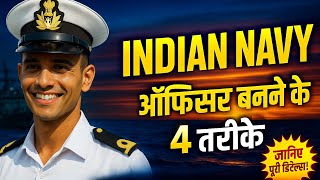


Helpful Resources
Articles and guides for deeper learning
Frequently Asked Questions
Quick answers to common questions
QWhat are the typical roles and responsibilities of an Indian Navy Officer?
Indian Navy Officers are responsible for leading and managing various operations, from navigation and combat to engineering and administration. They command ships, submarines, and aircraft, and are involved in strategic planning, training, and ensuring the operational readiness of their units.
QWhat are the physical and mental demands of being an Indian Navy Officer?
The role requires a high level of physical fitness and mental resilience. Officers must be prepared for demanding work hours, challenging living conditions at sea, and the ability to handle stressful situations effectively.
QWhat are the educational and training requirements for becoming an Indian Navy Officer?
Aspiring officers typically need a Bachelor's degree and must clear competitive entrance examinations like the NDA exam for the Army, Navy, and Air Force wings, or specific entry schemes like the Naval Architecture entry scheme. Rigorous training follows at naval academies.
Explore All 1,500+ Careers
Browse our full career explorer or take an assessment to get personalised recommendations.