Merchant Navy Officer
Also known as: Merchant Navy, Maritime Officer, Deck Officer, Marine Officer
A Merchant Navy Officer is a professional who works on civilian ships, which are non-military vessels used for commercial purposes. They are a crucial part of the global economy, responsible for operating and managing a massive fleet of ships that transport over 90% of the world's goods—everything from oil and electronics to food and cars. Unlike the navy, which is for national defense, the Merchant Navy is the backbone of international trade, ensuring that cargo and sometimes passengers travel safely and efficiently across the world's oceans on vessels like container ships, tankers, and cruise liners.
5
Skills to Learn
5
Career Levels
5
Top Companies
3
Education Paths
Sneak Peek
Do you dream of exploring the world and being in charge of massive ships that transport goods across oceans? A career as a Merchant Navy Officer might be your perfect adventure at sea!
What does a Merchant Navy Officer do?
A Merchant Navy Officer is a professional who works on civilian ships, which are non-military vessels used for commercial purposes. They are a crucial part of the global economy, responsible for operating and managing a massive fleet of ships that transport over 90% of the world's goods—everything from oil and electronics to food and cars.
- Demand
- Growing
- Remote work
- Location-Bound
- Industry
- Maritime
Is This Career For You?
Discover if your personality matches this career
Your Personality Fit (RIASEC)
You enjoy hands-on work and operating machinery, which is central to managing a ship's systems and navigating.
You like solving problems and analyzing situations, important for troubleshooting technical issues and making critical decisions at sea.
Leadership and decision-making are key as you'll be responsible for the ship and its crew.
You'll work closely with a diverse crew, requiring good communication and teamwork.
Adhering to strict protocols and regulations is a part of the job, requiring attention to detail and organized work.
This career path doesn't heavily rely on artistic skills.
You'll Love This Career If...
Like what you see? Get full access.
Save this career, compare with others, and get your personalized career plan.
50,000+ students already signed up
A Day in the Life
What your typical workday looks like
Imagine waking up to a new horizon every day! Your day typically involves overseeing navigation and ensuring the ship runs smoothly. This could mean anything from plotting the course, managing cargo operations, conducting safety drills, to supervising the engine room. You'll work closely with your crew, communicate with ports, and constantly adapt to changing weather and sea conditions, all while ensuring the safe and efficient transport of goods across the globe.
Myth vs Reality
Tap to reveal the truth behind common misconceptions
Skills You'll Need
Master these to excel in this career
Technical Skills
3Navigation
Understanding of maritime navigation and chartwork.
Marine Engineering
Knowledge of ship machinery and maintenance.
Safety Procedures
Familiarity with maritime safety protocols and emergency procedures.
Soft Skills
2Leadership
Ability to lead and manage a ship's crew.
Communication
Effective communication skills for coordinating with crew and other vessels.
Tools of the Trade
Software and tools you'll work with daily
Hardware
Navigation Systems (e.g., Radar, GPS, ECDIS)
These are essential for determining the ship's position, plotting courses, and avoiding collisions.
Marine Communication Systems (e.g., VHF radio, satellite phones)
Used for communicating with other ships, shore stations, and for emergency situations.
Engine Room Equipment (e.g., diesel engines, generators, pumps)
The machinery that powers the ship, requiring regular monitoring and maintenance.
Cargo Handling Equipment (e.g., cranes, conveyor systems)
Used for loading and unloading cargo efficiently and safely.
Safety Equipment (e.g., lifeboats, fire extinguishers, immersion suits)
Crucial for ensuring the safety of the crew and vessel in emergencies.
Software
Ship Management Software
Used for managing vessel operations, crew, and logistics.
Want to build these skills?
Get a personalized learning roadmap and save careers that match your profile.
50,000+ students already signed up
Your Learning Path
Step-by-step guide to getting started
High School Foundation
Focus on subjects like Physics, Chemistry, and Mathematics (PCM), and aim for good English proficiency. These are the building blocks for maritime studies and operations.
Maritime Education
Complete a relevant degree like B.Sc. in Nautical Science or B.Tech in Marine Engineering from a DG Shipping-approved institute. This provides specialized knowledge and practical training.
Pre-Sea Training & Certifications
Undergo mandatory pre-sea training and obtain essential certifications like STCW (Standards of Training, Certification and Watchkeeping). This prepares you for life and work at sea.
Entrance Exams and Onboard Training
Pass entrance exams like IMU CET and secure a position for onboard training as a cadet. This is where you gain practical experience and begin your career progression.
Career Progression
How your career will grow over time
Deck Cadet
EntryAspiring merchant navy officers begin as deck cadets, gaining hands-on experience on ships under the guidance of senior officers.
- Assisting senior officers with navigation
- Handling cargo operations
- Ensuring safety protocols
Third Officer
Mid-LevelAfter passing the Certificate of Competency exams, deck cadets advance to the role of Third Officer, overseeing life-saving and firefighting appliances.
- Managing life-saving and firefighting equipment
- Handling port documents
- Supporting the Chief Officer
Second Officer
Mid-LevelSecond Officers are responsible for charts, medical services, and navigational watches.
- Managing navigational charts
- Providing medical services
- Conducting navigational watches
Chief Officer
SeniorChief Officers ensure safe navigation, execute the captain’s commands, and oversee the deck.
- Ensuring safe navigation
- Executing the captain’s commands
- Overseeing the deck and crew welfare
Captain
LeadershipThe Captain is the highest-ranked officer, responsible for all nautical operations and shipboard activities.
- Overseeing all nautical operations
- Ensuring the safety and efficiency of the ship
- Final authority on the ship
Education Paths
Upper Secondary
Bachelor's Degree
B.Sc. in Nautical Science
Nautical Science
Bachelor's Degree
B.Tech. in Marine Engineering
Marine Engineering
Top Hiring Companies
Salary & Future Growth
What you can earn and where the industry is headed
Salary Progression (INR)
Future Career OutlookCurrent Market: Growing
The maritime shipping industry is the backbone of global trade, moving about 80% of merchandise by volume. While there was a slight dip in 2022, trade flows are recovering, indicating a stable demand for maritime professionals. The industry is undergoing transformation with a focus on efficiency and sustainability, creating new opportunities.
The maritime industry is essential and resilient, but it's also in a period of significant transformation driven by environmental regulations, technological advancements, and shifting global trade patterns. There's a growing emphasis on automation, digitalization, and green shipping technologies, which will shape the future job market. Demand for skilled officers is expected to remain stable to growing as global trade continues.
The long-term outlook for merchant navy officers remains positive, driven by the indispensable role of maritime transport in global commerce. While technological advancements like automation may alter some roles, the need for skilled human oversight in navigation, safety, and complex operations will persist. The push towards decarbonization and the adoption of new fuels and technologies will create demand for specialized expertise.
Not sure if Merchant Navy Officer is right for you?
Talk to a Stride counsellor for personalised guidance on whether this career fits your interests, strengths, and goals.
Watch & Learn
Curated videos to help you explore
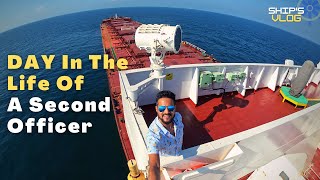



Helpful Resources
Articles and guides for deeper learning
Frequently Asked Questions
Quick answers to common questions
QWhat are the typical working hours for a merchant navy officer?
Working hours can be long and irregular, often involving 12-hour shifts, watchkeeping duties, and being on call for emergencies. Time off is usually accumulated in blocks between voyages.
QWhat is the difference between a First Mate and an Ordinary Seaman?
An Ordinary Seaman is an entry-level position focused on general maintenance and assistance under supervision. A First Mate is a second-in-command role with significant leadership, navigational, and administrative responsibilities, often a step towards becoming a captain.
QAre there opportunities for women in the merchant navy?
Yes, the maritime industry is increasingly opening up to women, and there are growing opportunities for them to serve as officers and in various other roles onboard vessels.
Explore All 1,500+ Careers
Browse our full career explorer or take an assessment to get personalised recommendations.