Oceanographer
Also known as: Marine Scientist, Marine Biologist, Marine Researcher
Oceanographers are scientists who study the physical, chemical, and biological aspects of the ocean. They investigate everything from ocean currents and underwater geology to marine ecosystems and the impact of climate change on marine life. Their work helps us understand the ocean's vital role in our planet's systems and how to protect it.
6
Skills to Learn
4
Career Levels
4
Top Companies
2
Education Paths
Sneak Peek
Have you ever wondered what mysteries lie beneath the waves, or how marine life adapts to the vast ocean? If you're fascinated by the planet's blue heart and eager to uncover its secrets, a career as an oceanographer might be your calling.
What does an Oceanographer do?
Oceanographers are scientists who study the physical, chemical, and biological aspects of the ocean. They investigate everything from ocean currents and underwater geology to marine ecosystems and the impact of climate change on marine life. Their work helps us understand the ocean's vital role in our planet's systems and how to protect it.
- Salary in India
- ₹5 to ₹18 lakh a year
- Demand
- Growing
- Remote work
- Hybrid
- Industry
- Information Technology
Is This Career For You?
Discover if your personality matches this career
Your Personality Fit (RIASEC)
You enjoy understanding how things work and are driven by curiosity.
You like hands-on activities and working with tools and equipment.
You enjoy helping others and collaborating in teams.
You are drawn to leadership and persuasive roles.
You prefer organized tasks and detailed work.
You appreciate creativity and self-expression.
You'll Love This Career If...
Like what you see? Get full access.
Save this career, compare with others, and get your personalized career plan.
50,000+ students already signed up
A Day in the Life
What your typical workday looks like
A typical day for an oceanographer can vary greatly. Some days might be spent in a laboratory, analyzing water samples, studying marine organisms, or processing data from research expeditions. Other days could involve being out at sea on a research vessel, deploying or retrieving scientific equipment, collecting samples, or conducting surveys. You might also spend time analyzing data on a computer, writing reports, collaborating with colleagues, or presenting findings at conferences.
Myth vs Reality
Tap to reveal the truth behind common misconceptions
Skills You'll Need
Master these to excel in this career
Technical Skills
2Data Analysis
The ability to analyze and interpret complex data sets.
Fieldwork
The ability to conduct research in natural environments.
Soft Skills
2Problem-Solving
The ability to identify problems and develop solutions.
Communication
The ability to effectively communicate findings and ideas.
Domain Skills
2Marine Biology
Knowledge of marine ecosystems and organisms.
Oceanography
Knowledge of ocean processes and phenomena.
Tools of the Trade
Software and tools you'll work with daily
Hardware
High-Frequency Radar (HFR)
Used to measure ocean surface currents and waves.
Autonomous Underwater Vehicles (AUVs) & Gliders
Robotic devices that collect data autonomously underwater.
Shipboard Sensors
Instruments mounted on research vessels to measure various ocean properties like temperature and salinity.
Software
Jupyter Notebooks
An interactive environment for writing and running code, visualizing data, and sharing results.
Python (with libraries like NumPy, Matplotlib, Pandas, Xarray, Cartopy)
A powerful programming language widely used for data analysis, visualization, and scientific computing in oceanography.
Regional Ocean Modeling System (ROMS)
A sophisticated computer model used to simulate ocean currents, temperatures, and other physical properties.
Geographic Information Systems (GIS)
Software used for analyzing and visualizing spatial data, often used to map oceanographic features and phenomena.
Want to build these skills?
Get a personalized learning roadmap and save careers that match your profile.
50,000+ students already signed up
Your Learning Path
Step-by-step guide to getting started
Explore the Oceans
Start by learning the basics of Earth science and biology. Watch documentaries, read books about marine life, and explore online resources about oceanography to spark your interest.
Build Foundational Skills
Focus on developing strong math and science skills in high school, particularly in subjects like algebra, calculus, physics, and biology. Try to take courses that introduce computer programming or data analysis.
Pursue Higher Education
Earn a Bachelor's degree in Oceanography, Marine Science, or a related field. This will provide you with in-depth knowledge and hands-on experience through laboratory work and potential internships.
Specialize and Gain Experience
Consider a Master's or Ph.D. for specialized research roles. Participate in research projects, fieldwork, and seek opportunities to work with oceanographic tools and data analysis to build practical expertise.
Career Progression
How your career will grow over time
Junior Oceanographer
EntryBeginning with hands-on learning, early days involve deploying instruments, gathering water samples, and decoding the ocean's subtle signals, usually under seasoned mentors.
- Assist in deploying instruments
- Collect water samples
- Analyze basic data
- Learn from experienced mentors
Physical Oceanographer
Mid-LevelWith 2-5 years of experience and often armed with a master's or doctoral degree, mid-level roles bring creative control. Responsibilities evolve to designing experiments, processing enormous data sets, and communicating discoveries through publications and presentations.
- Design experiments
- Process large data sets
- Publish research findings
- Present at conferences
Lead Scientist
SeniorWith ten or more years logged, senior positions such as Lead Scientist or Chief Oceanographer appear on the horizon. These roles command setting research priorities, securing funding for expansive projects, and mentoring emerging scientists.
- Set research priorities
- Secure funding
- Mentor junior scientists
- Lead research projects
Chief Oceanographer
LeadershipExpert oceanographers often specialize in niches like climate modeling, satellite sensing, or robotic exploration. They may also navigate lateral moves into consulting, policy advising, or science communication.
- Specialize in niche areas
- Provide consulting services
- Advise on policy
- Communicate scientific findings
Education Paths
Bachelor's Degree
B.Tech
Computer Science
Master's Degree
M.Sc
Environmental Science
Top Hiring Companies
Salary & Future Growth
What you can earn and where the industry is headed
Salary Progression (INR)
Future Career OutlookCurrent Market: Growing
Oceanography is a dynamic and evolving field. With increasing concerns about climate change, pollution, and the sustainable use of ocean resources, the demand for skilled oceanographers is expected to remain stable to grow. Opportunities exist in research, environmental consulting, government agencies, and the private sector.
The long-term outlook for oceanographers appears positive, driven by the critical need to understand and manage our oceans in the face of climate change, overfishing, and pollution. Advances in technology will likely create new avenues for research and impact.
As the global population grows and reliance on ocean resources intensifies, the role of oceanographers in ensuring the health and sustainability of marine ecosystems will become even more crucial. Continued research and innovation will be key.
Not sure if Oceanographer is right for you?
Talk to a Stride counsellor for personalised guidance on whether this career fits your interests, strengths, and goals.
Watch & Learn
Curated videos to help you explore


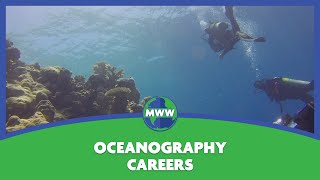

Helpful Resources
Articles and guides for deeper learning
Frequently Asked Questions
Quick answers to common questions
QWhat kind of education do I need to become an oceanographer?
A bachelor's degree in oceanography or a related science field like marine biology, geology, chemistry, or physics is typically the minimum requirement. Many positions, especially in research, require a master's or doctoral degree.
QWhat are the different types of oceanographers?
Oceanographers specialize in different areas such as biological oceanography (marine life), chemical oceanography (ocean chemistry), geological oceanography (seafloor and coasts), and physical oceanography (ocean currents, waves, and tides).
QWhat is the typical work environment for an oceanographer?
Oceanographers often work in research institutions, universities, government agencies (like NOAA), and environmental consulting firms. Some roles involve fieldwork on research vessels, while others are primarily lab- or office-based.
Explore All 1,500+ Careers
Browse our full career explorer or take an assessment to get personalised recommendations.