Power Electronics Hardware Design Engineer
Also known as: Power Systems Engineer, Hardware Design Engineer, Electronics Engineer
A Power Electronics Hardware Design Engineer designs, develops, and tests the electronic systems that efficiently manage and convert electrical power. They work with components like power converters, microcontrollers, and sensors to create solutions for everything from electric vehicles and renewable energy systems to data centers and industrial automation. This role involves everything from initial concept and schematic design to creating the physical circuit boards, simulating their performance, and testing them to ensure they meet high standards of efficiency, reliability, and safety.
7
Skills to Learn
4
Career Levels
5
Top Companies
3
Education Paths
Sneak Peek
Have you ever wondered how the electricity from the wall outlet safely powers your phone or computer? Or how renewable energy sources like solar and wind are efficiently converted into usable power for our grids? Power Electronics Hardware Design Engineers are the masterminds behind these essential energy conversion systems.
What does a Power Electronics Hardware Design Engineer do?
A Power Electronics Hardware Design Engineer designs, develops, and tests the electronic systems that efficiently manage and convert electrical power. They work with components like power converters, microcontrollers, and sensors to create solutions for everything from electric vehicles and renewable energy systems to data centers and industrial automation.
- Salary in India
- ₹5 to ₹15 lakh a year
- Demand
- Growing
- Remote work
- Hybrid
- Industry
- Electrical and Electronics
Is This Career For You?
Discover if your personality matches this career
Your Personality Fit (RIASEC)
You enjoy observing, learning, understanding, and problem-solving. You like to figure out how things work.
You enjoy working with your hands and with tools, and you like to work with real objects to achieve practical results.
You enjoy persuading, leading, and selling. You like to take risks and lead.
You enjoy working with data and carrying out detailed tasks. You are dependable and detail-oriented.
You enjoy interacting with people and helping them. You prefer jobs with a lot of social interaction.
You prefer to work in a structured environment and follow precise instructions. You are not a fan of ambiguity.
You'll Love This Career If...
Like what you see? Get full access.
Save this career, compare with others, and get your personalized career plan.
50,000+ students already signed up
A Day in the Life
What your typical workday looks like
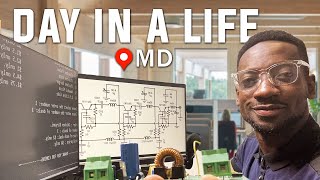
Imagine starting your day by reviewing the performance data from a newly tested power converter prototype. You might then spend time designing a new circuit schematic on your computer, carefully selecting components to optimize for efficiency and cost. Later, you could be in the lab, using specialized equipment like oscilloscopes to test a new board design, troubleshoot any issues, and collaborate with your team to refine the system before it moves to production.
Myth vs Reality
Tap to reveal the truth behind common misconceptions
Skills You'll Need
Master these to excel in this career
Technical Skills
3Circuit Design
Designing and developing electronic circuits.
PCB Layout
Creating detailed layouts for printed circuit boards.
Programming
Writing code to control and automate hardware systems.
Soft Skills
3Team Collaboration
Working effectively with cross-functional teams.
Project Management
Managing project timelines, resources, and deliverables.
Continuous Learning
Staying updated with the latest technological advancements.
Domain Skills
1Power Systems
Understanding power generation, distribution, and management.
Tools of the Trade
Software and tools you'll work with daily
Software
Altium Designer
Used for designing and laying out Printed Circuit Boards (PCBs).
SPICE
A simulation tool to model and analyze circuit behavior before building physical prototypes.
Python
Often used for test automation and scripting tasks in hardware development.
Hardware
Oscilloscope
Measures and displays electrical signal voltages over time, crucial for debugging.
Spectrum Analyzer
Analyzes the frequency content of signals, important for understanding signal integrity.
Logic Analyzer
Captures and displays multiple digital signals simultaneously, useful for debugging digital circuits.
Microcontrollers (e.g., ARM, PIC)
Small computers on a single chip used in embedded systems.
FPGAs (Field-Programmable Gate Arrays)
Integrated circuits that can be configured after manufacturing for specific digital logic tasks.
Want to build these skills?
Get a personalized learning roadmap and save careers that match your profile.
50,000+ students already signed up
Your Learning Path
Step-by-step guide to getting started
Master the Fundamentals
Start with a strong foundation in math (algebra, calculus) and physics. Explore introductory concepts of electricity and magnetism. Online courses and textbooks on basic circuit theory are great resources.
Dive into Electronics
Learn about analog and digital circuits, semiconductor devices, and basic electronic components. Use simulation tools like Tinkercad or CircuitLab to experiment with simple circuits. Watch educational YouTube channels like EEVblog.
Specialize in Power Electronics and PCB Design
Focus on power electronics principles (e.g., DC-DC converters, AC-DC converters) and Printed Circuit Board (PCB) design. Take online courses on platforms like Coursera or edX covering these specific topics. Practice designing simple PCBs using free software like KiCad.
Build and Test
Gain hands-on experience by working on personal projects. Build simple power circuits, program microcontrollers for control, and assemble PCBs. Consider contributing to open-source hardware projects or participating in robotics competitions to apply your skills.
Career Progression
How your career will grow over time
Junior Power Electronics Hardware Design Engineer
EntryBeginner-level role focusing on assisting senior engineers in designing and testing power electronic systems.
- Assist in designing power electronic circuits
- Perform simulations and analyses using software tools
- Collaborate with cross-functional teams for project execution
- Document design specifications and test results
Power Electronics Hardware Design Engineer
Mid-LevelIntermediate role involving independent design and testing of power electronic systems.
- Design and develop power electronic circuits and systems
- Conduct detailed simulations and analyses
- Ensure compliance with industry standards and safety regulations
- Collaborate with mechanical engineers and software developers
Senior Power Electronics Hardware Design Engineer
SeniorAdvanced role leading complex power electronic design projects and mentoring junior engineers.
- Lead design projects for power electronic systems
- Mentor and guide junior engineers
- Ensure design efficiency and reliability
- Collaborate with stakeholders for project alignment
Principal Power Electronics Hardware Design Engineer
LeadershipTop-tier role overseeing strategic design initiatives and driving innovation in power electronics.
- Oversee strategic design initiatives for power electronic systems
- Drive innovation and research in power electronics
- Lead cross-functional teams for major projects
- Ensure alignment with company goals and industry trends
Education Paths
Bachelor's Degree
B.Tech in Electrical Engineering or Electronics and Communication Engineering
Electrical Engineering
Master's Degree
M.Tech in Power Electronics or Electrical Engineering
Electrical Engineering
Professional Degree
Professional Engineer (PE) licensure
Top Hiring Companies
Salary & Future Growth
What you can earn and where the industry is headed
Salary Progression (INR)
Future Career OutlookCurrent Market: Growing
Power Electronics Hardware Design Engineers are in demand as they are crucial for developing efficient power conversion and control systems for a wide range of applications, including renewable energy, electric vehicles, and industrial automation. The field is experiencing growth due to the increasing focus on energy efficiency and the transition to greener technologies.
The demand for Power Electronics Hardware Design Engineers is expected to remain strong in the medium to long term. Advancements in areas like electric vehicles, smart grids, and renewable energy sources will continue to drive the need for specialized skills in power conversion and management. The integration of AI and advanced materials in power electronics will also create new opportunities.
In the very long term, Power Electronics Hardware Design Engineers will likely remain essential as societies continue to prioritize energy efficiency, sustainable energy solutions, and advanced technological systems. The ongoing evolution of electronics and the continuous push for innovative power solutions suggest a sustained need for these professionals.
Not sure if Power Electronics Hardware Design Engineer is right for you?
Talk to a Stride counsellor for personalised guidance on whether this career fits your interests, strengths, and goals.
Watch & Learn
Curated videos to help you explore


Helpful Resources
Articles and guides for deeper learning
Frequently Asked Questions
Quick answers to common questions
QWhat specific industries hire Power Electronics Hardware Design Engineers?
Power Electronics Hardware Design Engineers are hired in a variety of industries, including automotive (especially for electric vehicles), renewable energy (solar, wind), industrial automation, consumer electronics, aerospace, and defense.
QWhat is the typical educational background for this role?
A bachelor's degree in Electrical Engineering, Electronics Engineering, or a related field is typically required. Master's or Ph.D. degrees are often preferred for research and development or more specialized roles.
QWhat are some key challenges faced by Power Electronics Hardware Design Engineers?
Key challenges include staying updated with rapidly evolving technologies, managing complex thermal issues in high-power systems, ensuring electromagnetic compatibility (EMC), and optimizing designs for cost, efficiency, and reliability under demanding specifications.
QHow does this role differ from a general Electrical Engineer?
While a general Electrical Engineer has a broader scope, a Power Electronics Hardware Design Engineer specializes in the design, development, and testing of circuits and systems that convert, control, and condition electrical power efficiently. This often involves high voltages, currents, and frequencies.
QWhat are the future trends impacting this field?
Future trends include the integration of wide-bandgap semiconductors (like SiC and GaN) for higher efficiency and performance, advancements in electric vehicle charging infrastructure, smart grid technologies, renewable energy integration, and the application of AI in power system design and control.
Explore All 1,500+ Careers
Browse our full career explorer or take an assessment to get personalised recommendations.