Quantity Estimator
Also known as: Quantity Surveyor, Cost Estimator
A Quantity Estimator, often called a Quantity Surveyor, is like the financial architect of a construction project. They meticulously calculate all the costs involved in building something, from the smallest nail to the biggest beam. Their main job is to ensure that projects are completed within budget by estimating material quantities, labor costs, and other expenses. They also help in managing contracts and tenders, making sure everything is financially sound and efficient.
10
Skills to Learn
4
Career Levels
4
Top Companies
2
Education Paths
Sneak Peek
Have you ever wondered how much it costs to build a skyscraper or a bridge? What if you could be the person who figures out the exact price tag for massive construction projects, ensuring they stay on budget from start to finish?
What does a Quantity Estimator do?
A Quantity Estimator, often called a Quantity Surveyor, is like the financial architect of a construction project. They meticulously calculate all the costs involved in building something, from the smallest nail to the biggest beam. Their main job is to ensure that projects are completed within budget by estimating material quantities, labor costs, and other expenses.
- Salary in India
- ₹5 to ₹10 lakh a year
- Demand
- Growing
- Remote work
- Remote-Friendly
- Industry
- Construction
Is This Career For You?
Discover if your personality matches this career
Your Personality Fit (RIASEC)
You enjoy working with your hands and with tools, and you like to see the tangible results of your work. Construction projects involve many physical materials and processes, which aligns with a realistic interest.
You like order and structure, and you enjoy working with data and details. Quantity estimating requires meticulous organization, precise calculations, and adherence to established procedures.
You are curious and like to solve problems. Estimating involves analyzing complex project details, specifications, and potential challenges to calculate costs accurately.
You might enjoy the negotiation and bidding aspects, but the core of the role is analytical rather than leadership-driven.
This role is less about direct social interaction and more about data analysis and technical tasks.
While creativity isn't the primary focus, finding innovative cost-saving solutions can involve some creative thinking.
You'll Love This Career If...
Like what you see? Get full access.
Save this career, compare with others, and get your personalized career plan.
50,000+ students already signed up
A Day in the Life
What your typical workday looks like
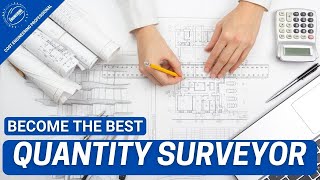
Imagine starting your day by reviewing blueprints and project plans – those detailed drawings that show exactly how a building or bridge will be constructed. You'll use specialized software to measure and count every single material needed, from concrete and steel to pipes and wires. Then, you'll research current prices for these materials and figure out how much labor will be required. Throughout the day, you might be communicating with architects, engineers, and contractors to clarify project details and finalize cost estimates. Your goal is to create a precise budget that keeps the project on track financially.
Myth vs Reality
Tap to reveal the truth behind common misconceptions
Skills You'll Need
Master these to excel in this career
Technical Skills
5Cost Estimation
Analyzing and predicting project costs.
Analytical Thinking
Solving complex problems using logical reasoning.
Budget Management
Managing and controlling project budgets.
Project Management
Overseeing the planning and execution of projects.
Software Proficiency
Using software tools for estimation and analysis.
Soft Skills
3Communication
Effectively conveying ideas and information.
Attention to Detail
Focusing on small details to ensure accuracy.
Negotiation Skills
Discussing and reaching agreements with stakeholders.
Domain Skills
2Knowledge of Construction
Understanding construction processes and materials.
Regulatory Knowledge
Understanding relevant laws and regulations.
Tools of the Trade
Software and tools you'll work with daily
Software
Construction Specifications
Detailed documents outlining the quality of materials, workmanship, and systems required for a project.
Blueprints/Drawings
Technical drawings that show the design and dimensions of a building or structure.
Estimating Software (e.g., Procore, RSMeans, PlanSwift)
Tools that help automate calculations, manage cost databases, and create quantity takeoffs.
Spreadsheets (e.g., Microsoft Excel)
Used for organizing data, performing calculations, and creating cost breakdowns.
Unit Price Books
Databases containing pricing information for materials, labor, and equipment.
BIM (Building Information Modeling) Tools
Advanced software that creates digital representations of physical and functional characteristics of places, allowing for detailed analysis and quantity extraction.
Want to build these skills?
Get a personalized learning roadmap and save careers that match your profile.
50,000+ students already signed up
Your Learning Path
Step-by-step guide to getting started
Understand Construction Basics
Start by learning about different types of construction projects, common building materials, and basic construction processes. You can explore online resources, watch documentaries, or even visit local construction sites to get a feel for the industry.
Master Math and Measurement
Focus on improving your math skills, especially in areas like algebra, geometry, and basic trigonometry. Learn how to accurately measure lengths, areas, and volumes, as the foundation of estimating is precise quantity takeoff.
Dive into Estimating Principles
Explore introductory courses on construction cost estimating. Learn about bid packages, specifications, labor rates, material costs, and overhead. Familiarize yourself with terms like 'quantity takeoff' and 'bid preparation'.
Get Hands-On with Software
Begin learning how to use essential tools like spreadsheets (Excel) for calculations and data organization. As you progress, explore introductory modules of estimating software or BIM tools to see how technology streamlines the process.
Career Progression
How your career will grow over time
Junior Quantity Estimator
EntryAssists senior estimators in calculating costs and resources for projects.
- Review blueprints and specifications.
- Assist in preparing cost estimates.
- Gather quotes from suppliers.
- Support in analyzing project risks and contingencies.
Quantity Estimator
Mid-LevelResponsible for preparing detailed cost estimates for construction projects.
- Calculate material quantities, labor hours, and equipment needs.
- Obtain competitive quotes from suppliers and subcontractors.
- Prepare comprehensive proposals for clients.
- Collaborate with project managers and engineers.
Senior Quantity Estimator
SeniorLeads estimating projects and mentors junior estimators.
- Lead complex project estimates.
- Manage and refine estimates to secure project bids.
- Mentor junior estimators.
- Ensure accurate record-keeping of bids and project outcomes.
Chief Quantity Estimator
LeadershipOversees the estimating department and strategy.
- Develop and implement estimating strategies.
- Manage a team of estimators.
- Ensure compliance with company policies and industry standards.
- Drive continuous improvement in estimating processes.
Education Paths
Bachelor's Degree
B.Tech/B.Sc in Civil Engineering or Construction Management
Civil Engineering/Construction Management
Professional Degree
Certified Professional Estimator (CPE)
Construction Estimating
Top Hiring Companies
Salary & Future Growth
What you can earn and where the industry is headed
Salary Progression (INR)
Future Career OutlookCurrent Market: Growing
The demand for Quantity Estimators is projected to grow as fast as the average for all occupations. With .6k openings annually, there are consistent opportunities in various industries.
The role of a Quantity Estimator is expected to remain stable, with continued demand driven by ongoing construction, manufacturing, and engineering projects. Automation may change tasks, but the core need for cost analysis expertise will persist.
As industries continue to evolve with technological advancements, Quantity Estimators who adapt by incorporating new tools and analytical methods will remain valuable. The foundational need for accurate cost assessment ensures long-term relevance.
Not sure if Quantity Estimator is right for you?
Talk to a Stride counsellor for personalised guidance on whether this career fits your interests, strengths, and goals.
Watch & Learn
Curated videos to help you explore


Helpful Resources
Articles and guides for deeper learning
Frequently Asked Questions
Quick answers to common questions
QWhat is the typical work environment for a Quantity Estimator?
Quantity Estimators typically work in an office setting, which can be traditional or remote. The environment is often collaborative, requiring interaction with project managers, engineers, and clients. The pace can be fast, especially near deadlines.
QWhat are the key skills needed for a Quantity Estimator?
Essential skills include blueprint reading, cost analysis, proficiency in estimating software, strong attention to detail, analytical thinking, and communication.
QWhat is the educational path for a Quantity Estimator?
A Bachelor's degree in a related field like construction management or engineering is common, but extensive experience or an associate's degree with relevant training can also lead to this career.
Explore All 1,500+ Careers
Browse our full career explorer or take an assessment to get personalised recommendations.