Research Assistant
Also known as: Research Associate, Clinical Research Assistant, RA
A Research Assistant is a key player in various fields, supporting scientists and researchers in their quest for knowledge. They are involved in collecting data, conducting experiments, analyzing results, and preparing reports. This role requires a keen eye for detail, a systematic approach to tasks, and a passion for contributing to advancements in science and technology.
5
Skills to Learn
4
Career Levels
5
Top Companies
2
Education Paths
Sneak Peek
Do you love solving puzzles and uncovering how things work? Are you fascinated by the idea of contributing to groundbreaking discoveries that could change the world?
What does a Research Assistant do?
A Research Assistant is a key player in various fields, supporting scientists and researchers in their quest for knowledge. They are involved in collecting data, conducting experiments, analyzing results, and preparing reports. This role requires a keen eye for detail, a systematic approach to tasks, and a passion for contributing to advancements in science and technology.
- Salary in India
- ₹4 to ₹10 lakh a year
- Demand
- Growing
- Remote work
- Hybrid
- Industry
- Information Technology
Is This Career For You?
Discover if your personality matches this career
Your Personality Fit (RIASEC)
You enjoy exploring complex problems, conducting in-depth research, and analyzing data to find answers.
You are meticulous and organized, with a knack for following procedures and managing information accurately.
You appreciate creativity and novel approaches to presenting information and findings.
You can work collaboratively with others and enjoy contributing to larger projects.
You don't mind hands-on tasks, but your primary focus is on intellectual exploration.
You are less focused on leading or persuading others and more on the research itself.
You'll Love This Career If...
Like what you see? Get full access.
Save this career, compare with others, and get your personalized career plan.
50,000+ students already signed up
A Day in the Life
What your typical workday looks like
Imagine your day starting with setting up experiments or gathering samples, meticulously following protocols to ensure accuracy. You might spend time in a lab, carefully recording observations, or perhaps analyzing data on a computer, looking for patterns and trends. You
Myth vs Reality
Tap to reveal the truth behind common misconceptions
Skills You'll Need
Master these to excel in this career
Technical Skills
1Data Management
Handling and organizing research data effectively.
Soft Skills
3Attention to Detail
Ensuring precise and accurate execution of tasks.
Communication Skills
Effectively communicating with team members and participants.
Organizational Skills
Managing multiple tasks and deadlines efficiently.
Domain Skills
1Knowledge of Research Protocols
Understanding and following clinical trial protocols.
Tools of the Trade
Software and tools you'll work with daily
Platform
Library Databases (e.g., PubMed, Embase, Novanet)
These are specialized search engines for finding academic articles, journals, and other scholarly resources relevant to a research topic.
Software
Citation Management Software (e.g., Zotero, EndNote, Mendeley)
Tools used to organize research sources, manage bibliographies, and format citations in academic papers.
Spreadsheets (e.g., Microsoft Excel)
Used for organizing, analyzing, and visualizing data collected during research.
Web Browsers
Essential for accessing online resources, databases, and conducting literature searches.
Want to build these skills?
Get a personalized learning roadmap and save careers that match your profile.
50,000+ students already signed up
Your Learning Path
Step-by-step guide to getting started
Master the Art of Finding Information
Start by learning how to effectively search academic databases and library catalogs. Focus on identifying keywords, using Boolean operators (AND, OR, NOT), and understanding different types of resources like journals, books, and primary sources.
Get Organized with Data Management
Learn how to organize the information you find. This includes using citation management tools to keep track of your sources and understanding basic data organization principles for any data you collect.
Understand Research Ethics and Copyright
Familiarize yourself with ethical research practices, including academic integrity and copyright laws. Knowing your rights and responsibilities as a researcher is crucial.
Develop Your Research Skills
Practice analyzing information, synthesizing findings, and documenting your research process. This could involve working on small projects, assisting with existing research, or taking introductory courses in research methods.
Career Progression
How your career will grow over time
Junior Research Assistant
EntryAssists in data collection and analysis under supervision.
- Conduct literature reviews
- Collect and analyze data
- Prepare research documentation
Research Assistant
Mid-LevelManages multiple research projects and collaborates with senior researchers.
- Design experiments
- Analyze complex data sets
- Prepare reports and presentations
Senior Research Assistant
SeniorLeads research projects and mentors junior assistants.
- Oversee project timelines
- Mentor junior staff
- Publish research findings
Principal Research Associate
LeadershipDirects large-scale research initiatives and strategic planning.
- Develop research strategies
- Secure funding
- Lead cross-functional teams
Education Paths
Bachelor's Degree
B.Tech
Computer Science
Master's Degree
M.Sc
Data Science
Top Hiring Companies
Salary & Future Growth
What you can earn and where the industry is headed
Salary Progression (INR)
Future Career OutlookCurrent Market: Growing
Research assistants are integral to the advancement of knowledge across various fields. Their work involves supporting senior researchers, conducting experiments, collecting and analyzing data, and contributing to research publications. The demand for research assistants is expected to grow as scientific and technological advancements continue to drive the need for more in-depth studies.
The role of a research assistant is likely to evolve with technological advancements, particularly in areas like data analysis and automation. As research becomes more complex and data-driven, research assistants with strong analytical and technical skills will remain in high demand. The increasing trend towards remote and hybrid work models may also open up more opportunities for research assistants in different geographical locations.
In the long term, research assistants who adapt to new technologies and methodologies will continue to find rewarding careers. The need for meticulous data collection, analysis, and interpretation will persist across academic, industrial, and governmental sectors. Specialization in emerging fields or advanced research techniques could lead to significant career growth and opportunities.
Not sure if Research Assistant is right for you?
Talk to a Stride counsellor for personalised guidance on whether this career fits your interests, strengths, and goals.
Watch & Learn
Curated videos to help you explore
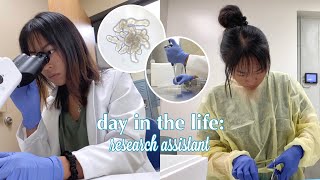




Helpful Resources
Articles and guides for deeper learning
Frequently Asked Questions
Quick answers to common questions
QWhat qualifications do I need to become a Research Assistant?
Typically, a Bachelor's degree in a relevant field is required. Some positions may prefer or require a Master's degree, especially for more advanced research tasks. Strong analytical, organizational, and communication skills are also essential.
QWhat are the typical day-to-day tasks of a Research Assistant?
Day-to-day tasks can vary widely but often include literature reviews, data collection (e.g., surveys, experiments), data entry and analysis, laboratory work, preparing research materials, and assisting with writing reports or publications.
QCan a Research Assistant work remotely?
The feasibility of remote work for a Research Assistant often depends on the nature of the research. Data analysis, literature reviews, and report writing can often be done remotely. However, roles involving lab work, direct participant interaction, or handling physical materials are typically location-bound or require a hybrid approach.
Explore All 1,500+ Careers
Browse our full career explorer or take an assessment to get personalised recommendations.