Space Technologist
Also known as: Space Tech, Aerospace Technologist
A space technologist is a broad term for professionals who work with the design, development, testing, and operation of spacecraft, satellites, rockets, and related space systems. They apply principles of science and engineering to solve complex problems, pushing the boundaries of what
10
Skills to Learn
4
Career Levels
5
Top Companies
2
Education Paths
Sneak Peek
Have you ever looked up at the stars and wondered what it would be like to build the rockets that take us there, or design the satellites that help us communicate across the globe? If you dream of being at the forefront of human discovery, a career as a space technologist might be your launchpad.
What does a Space Technologist do?
A space technologist is a broad term for professionals who work with the design, development, testing, and operation of spacecraft, satellites, rockets, and related space systems.
- Salary in India
- ₹5 to ₹20 lakh a year
- Demand
- Growing
- Remote work
- Hybrid
- Industry
- Aerospace
Is This Career For You?
Discover if your personality matches this career
Your Personality Fit (RIASEC)
You love to research, investigate, and solve complex problems, which is central to understanding the universe.
You enjoy working with your hands and with technology, which is crucial for building and maintaining space equipment.
You have a creative side and can visualize new concepts, useful for designing innovative space systems.
You can collaborate with others and share knowledge, important for working in large, diverse space exploration teams.
You appreciate structure and organization, beneficial for managing complex space missions and data.
You are willing to take the lead and persuade others, which can be helpful in project management and securing funding.
You'll Love This Career If...
Like what you see? Get full access.
Save this career, compare with others, and get your personalized career plan.
50,000+ students already signed up
A Day in the Life
What your typical workday looks like
Imagine starting your day by heading to a mission control center, similar to what you see in the movies, but with real-time data streams and complex systems to monitor. You might spend your morning analyzing telemetry from a satellite in orbit, troubleshooting a minor issue, or collaborating with a team of engineers on the next phase of a lunar mission. Afternoons could involve reviewing designs for a new rocket component, running simulations on advanced software, or even working with scientists to interpret data from a deep space probe. The work is constantly evolving, with new challenges and discoveries emerging regularly, making every day a unique adventure in exploring the cosmos.
Myth vs Reality
Tap to reveal the truth behind common misconceptions
Skills You'll Need
Master these to excel in this career
Technical Skills
6Programming languages (Python, MATLAB, C++)
Ability to write and debug code for space-related applications.
Data analysis and computational modeling
Skills in analyzing complex data and creating computational models.
Robotics and automation
Understanding of robotic systems and automation processes used in space missions.
Aerospace engineering principles
Knowledge of the fundamental principles of aerospace engineering.
Experimental design
Skills in designing and conducting experiments related to space technology.
Simulation and modeling
Ability to create and use simulations and models for space missions.
Soft Skills
4Critical thinking and problem-solving
Ability to think critically and solve complex problems in space technology.
Communication and teamwork
Skills in effectively communicating and working in teams.
Adaptability and resilience
Ability to adapt to changing environments and handle stress.
Scientific writing and peer-reviewed publication
Skills in writing scientific papers and getting them published.
Tools of the Trade
Software and tools you'll work with daily
Software
CAD Software (e.g., SolidWorks, AutoCAD)
Used for designing and modeling spacecraft, components, and systems in 3D.
Simulation Software (e.g., MATLAB, ANSYS)
Helps test and analyze designs under various space conditions before building.
Programming Languages (e.g., Python, C++)
Used for developing control systems, analyzing data, and programming robots.
Platform
Data Analysis Platforms
Tools for processing and interpreting the vast amounts of data collected from space missions.
High-Performance Computing Clusters
Powerful computer systems used for complex simulations and data analysis.
Hardware
Space-Rated Hardware Components
Specialized components designed to withstand the extreme conditions of space (e.g., radiation, temperature fluctuations).
Telescopes and Sensors
Instruments used to observe and collect data from celestial objects and phenomena.
Want to build these skills?
Get a personalized learning roadmap and save careers that match your profile.
50,000+ students already signed up
Your Learning Path
Step-by-step guide to getting started
Explore the Basics of STEM
Start by getting comfortable with science (physics, chemistry, biology) and math (algebra, calculus). These are the building blocks for understanding space technology.
Learn About Space and Aerospace
Read books, watch documentaries, and follow space news. Learn about our solar system, the universe, and the history of space exploration. Consider joining a school science club.
Develop Technical Skills
If possible, take classes in computer science, engineering, or robotics. Experiment with coding and learn how to use design software. Many online resources offer introductory courses.
Specialize and Seek Experience
As you get closer to college, choose a focus like aerospace engineering, astrophysics, or data science. Look for internships or projects related to space technology to gain practical experience.
Career Progression
How your career will grow over time
Junior Space Technologist
EntryA Junior Space Technologist assists in designing and testing space technologies under the supervision of senior technologists.
- Assist in designing space technologies
- Perform basic testing and data collection
- Collaborate with senior technologists
Space Technologist
Mid-LevelA Space Technologist designs, develops, and tests space technologies, often working independently on projects.
- Design and develop space technologies
- Conduct experiments and data analysis
- Prepare technical reports and documentation
Senior Space Technologist
SeniorA Senior Space Technologist leads projects, oversees the work of junior technologists, and contributes to strategic planning.
- Lead space technology projects
- Mentor junior technologists
- Contribute to strategic planning and decision-making
Chief Space Technologist
LeadershipA Chief Space Technologist directs the overall technology strategy, manages large-scale projects, and represents the organization in industry forums.
- Direct technology strategy and innovation
- Manage large-scale projects
- Represent the organization in industry forums and conferences
Education Paths
Bachelor's Degree
B.Tech
Aerospace Engineering
Master's Degree
M.Tech
Aerospace Engineering
Top Hiring Companies
Salary & Future Growth
What you can earn and where the industry is headed
Salary Progression (INR)
Future Career OutlookCurrent Market: Growing
The field of space technology is experiencing rapid growth, driven by increased commercial investment and advancements in artificial intelligence. This expansion is creating new job opportunities beyond traditional astronaut roles.
Continued growth is expected as space exploration and commercialization efforts intensify. AI and automation will likely play an even larger role, making space professions more feasible and profitable.
The long-term outlook for space technology is very positive, with potential for significant expansion in orbital work and the development of a robust space economy. AI will be a key enabler of this future.
Not sure if Space Technologist is right for you?
Talk to a Stride counsellor for personalised guidance on whether this career fits your interests, strengths, and goals.
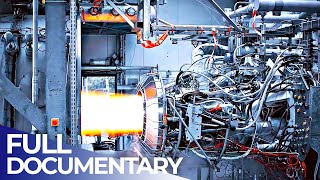
Watch & Learn
Curated videos to help you explore




Helpful Resources
Articles and guides for deeper learning
Frequently Asked Questions
Quick answers to common questions
QWhat kind of jobs will be available in the space industry?
Beyond astronauts, there will be a wide range of jobs in areas like AI development for space, satellite operations, data analysis, engineering, and more.
QHow is AI impacting space careers?
AI is making space professions more feasible and profitable by assisting with complex tasks, automation, and data processing.
QCan I work in space technology without being an astronaut?
Absolutely! The industry needs many skilled professionals on Earth to design, build, operate, and analyze data from space missions and technologies.
Explore All 1,500+ Careers
Browse our full career explorer or take an assessment to get personalised recommendations.