Associate Backend Developer
Also known as: Backend Engineer, Server-Side Developer
As an Associate Backend Developer, you'll be a key player in building and maintaining the server-side of applications. This means writing the code that makes databases talk to each other, managing how information is stored and retrieved, and ensuring that the systems users interact with are fast, reliable, and secure. You're essentially the architect and engineer of the digital backbone that supports all the cool features you see on your screen.
7
Skills to Learn
4
Career Levels
5
Top Companies
2
Education Paths
Sneak Peek
Ever wondered how your favorite apps and websites work seamlessly behind the scenes? Who builds the invisible engine that powers every click, every transaction, and every interaction you experience online?
What does an Associate Backend Developer do?
You'll be a key player in building and maintaining the server-side of applications. This means writing the code that makes databases talk to each other, managing how information is stored and retrieved, and ensuring that the systems users interact with are fast, reliable, and secure.
- Salary in India
- ₹5 to ₹18 lakh a year
- Demand
- Growing
- Remote work
- Hybrid
- Industry
- Information Technology
Is This Career For You?
Discover if your personality matches this career
Your Personality Fit (RIASEC)
You enjoy digging into complex problems, analyzing systems, and finding logical solutions.
You like working with tools and technology to build and create tangible results.
You appreciate structured processes and attention to detail in organizing information.
You might enjoy influencing others and working towards project goals.
While not the primary focus, collaboration with team members is a part of the role.
This role involves creative problem-solving within technical constraints, but less direct artistic expression.
You'll Love This Career If...
Like what you see? Get full access.
Save this career, compare with others, and get your personalized career plan.
50,000+ students already signed up
A Day in the Life
What your typical workday looks like
Imagine starting your day by grabbing a coffee and then diving into your tasks for the day. You might begin by reviewing code written by your teammates, providing feedback, or refining your own code to make sure it's efficient and bug-free. Later, you could be working on building new features for an application, collaborating with frontend developers to ensure everything integrates smoothly, or diving into databases to organize and retrieve information. You might also spend time troubleshooting an issue that popped up, figuring out why something isn't working as expected and finding a solution. It's a role that involves a lot of problem-solving, learning, and working with others to build the core of digital products.
Myth vs Reality
Tap to reveal the truth behind common misconceptions
Skills You'll Need
Master these to excel in this career
Technical Skills
4Backend Programming Languages
Proficiency in languages like Python, Java, or Ruby.
Database Management
Skills in working with SQL and NoSQL databases.
API Development
Ability to design and implement RESTful APIs.
Version Control
Knowledge of Git and other version control systems.
Soft Skills
3Problem-Solving
Strong analytical and problem-solving skills.
Team Collaboration
Ability to work effectively in a team environment.
Continuous Learning
Willingness to stay updated with the latest technologies and trends.
Tools of the Trade
Software and tools you'll work with daily
Platform
Node.js
A JavaScript runtime environment used for building server-side applications.
Python
A versatile programming language popular for backend development, data science, and more.
Ruby
A dynamic, open-source programming language often used with the Ruby on Rails framework.
PHP
A widely-used server-side scripting language, especially for web development.
MySQL
A popular open-source relational database management system.
MongoDB
A NoSQL database known for its flexibility and scalability.
Cassandra
A highly scalable, distributed NoSQL database.
Framework
GraphQL
A query language for APIs, offering more efficient and flexible data retrieval.
RESTful APIs
A set of architectural principles for designing networked applications, commonly used for web services.
Software
Git
A version control system essential for tracking code changes and collaborating with teams.
Docker
A platform for developing, shipping, and running applications in containers, simplifying deployment.
Postman
An application used for testing and documenting APIs.
Want to build these skills?
Get a personalized learning roadmap and save careers that match your profile.
50,000+ students already signed up
Your Learning Path
Step-by-step guide to getting started
Grasp the Fundamentals
Start by understanding the basics of how computers and the internet work. Learn foundational programming concepts like variables, loops, and functions. Think of it like learning the alphabet and grammar before writing a story.
Choose Your First Language & Tools
Pick a beginner-friendly backend language like Python or JavaScript (Node.js). Get comfortable writing basic code and learn about essential tools like Git for version control.
Dive into Databases and APIs
Learn how to store and retrieve data using databases (like SQL or NoSQL). Understand how to build APIs, which are like messengers that allow different software parts to talk to each other.
Build and Showcase Projects
Start building small projects, like a simple blog or a to-do list app. This hands-on experience is crucial! Create a portfolio to show off your work to potential employers.
Career Progression
How your career will grow over time
Associate Backend Developer
EntryAn entry-level role responsible for assisting in the development and maintenance of backend systems.
- Assisting in coding backend logic
- Helping with database management
- Contributing to API development
- Participating in debugging and testing
- Supporting performance optimization efforts
Backend Developer
Mid-LevelA mid-level role involving independent development and maintenance of backend systems.
- Developing backend logic independently
- Managing databases
- Creating and integrating APIs
- Debugging and testing applications
- Optimizing backend performance
Senior Backend Developer
SeniorA senior-level role responsible for leading backend development projects and mentoring junior developers.
- Leading backend development projects
- Mentoring junior developers
- Designing system architectures
- Implementing security measures
- Optimizing backend processes
Lead Backend Developer
LeadershipA leadership role involving strategic decision-making and management of backend development teams.
- Setting strategic technology directions
- Managing backend development teams
- Ensuring system scalability and reliability
- Driving innovation in backend technologies
- Collaborating with other departments for project success
Education Paths
Bachelor's Degree
B.Tech/B.E. in Computer Science
Computer Science
Professional Degree
Master's Degree in Computer Science
Computer Science
Top Hiring Companies
Salary & Future Growth
What you can earn and where the industry is headed
Salary Progression (INR)
Future Career OutlookCurrent Market: Growing
The demand for backend developers is strong and expected to remain so, with a growing need for professionals who can manage complex systems and integrate AI tools. While AI is automating some routine tasks, it's also creating new opportunities for developers to focus on higher-level responsibilities like system design and architecture.
The field of backend development is projected to grow significantly over the next decade, driven by ongoing digital transformation, the expansion of cloud computing, and the increasing integration of AI. Experienced developers who adapt to new technologies and focus on system design and AI collaboration will be in high demand.
As technology continues to evolve, backend development will remain a critical component of the digital landscape. The role will likely see a continued shift towards more strategic and complex problem-solving, with AI playing an augmenting role. Continuous learning and adaptation will be key for long-term success.
Not sure if Associate Backend Developer is right for you?
Talk to a Stride counsellor for personalised guidance on whether this career fits your interests, strengths, and goals.
Watch & Learn
Curated videos to help you explore



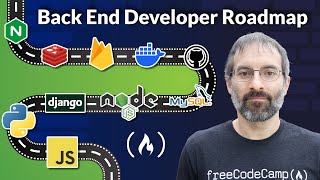
![Full Backend Development For Beginners - Project Based Course [10+ Hours]](https://i.ytimg.com/vi/_IC6wEt6KRc/mqdefault.jpg)

Helpful Resources
Articles and guides for deeper learning
Frequently Asked Questions
Quick answers to common questions
QWhat is the difference between frontend and backend development?
Frontend development focuses on what the user sees and interacts with on a website or app (the "client-side"), while backend development deals with the server, databases, and the logic that powers the application (the "server-side").
QDo I need a computer science degree to become a backend developer?
While a computer science degree can be beneficial, it's not always required. Many successful backend developers learn through coding bootcamps, online courses, and self-study, often supported by a strong portfolio of projects.
QHow important is it to know about cloud computing for backend developers?
Cloud computing is increasingly important for backend developers. Understanding platforms like AWS, Azure, or Google Cloud allows you to build, deploy, and manage applications more efficiently and at scale.
Explore All 1,500+ Careers
Browse our full career explorer or take an assessment to get personalised recommendations.