Automotive Master Mechanic
Also known as: Automotive Technician, Auto Mechanic, Service Technician, Car Mechanic
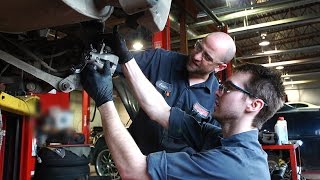
An Automotive Master Mechanic is a highly skilled professional who diagnoses, maintains, and repairs vehicles. They possess a deep understanding of a car's complex systems, from the engine and transmission to the electrical and computer systems. Master mechanics use a variety of tools, including advanced diagnostic equipment, to identify issues, perform repairs, and ensure vehicles are running safely and efficiently. They are the go-to experts for challenging automotive problems.
6
Skills to Learn
4
Career Levels
5
Top Companies
2
Education Paths
Sneak Peek
Do you love tinkering with cars and figuring out what makes them tick? Have you ever wondered what it takes to diagnose and fix even the most complex automotive problems?
What does an Automotive Master Mechanic do?
An Automotive Master Mechanic is a highly skilled professional who diagnoses, maintains, and repairs vehicles. They possess a deep understanding of a car's complex systems, from the engine and transmission to the electrical and computer systems. Master mechanics use a variety of tools, including advanced diagnostic equipment, to identify issues, perform repairs, and ensure vehicles are running safely and efficiently.
- Salary in India
- ₹3 to ₹12 lakh a year
- Demand
- Growing
- Remote work
- Location-Bound
- Industry
- Automotive
Is This Career For You?
Discover if your personality matches this career
Your Personality Fit (RIASEC)
You enjoy hands-on work with tools and machines.
You like solving problems and figuring out how things work.
There are opportunities to run your own business or lead a team.
You'll work with established procedures and maintain detailed records.
You'll interact with customers and colleagues, but it's not the primary focus.
This career doesn't heavily rely on artistic expression.
You'll Love This Career If...
Like what you see? Get full access.
Save this career, compare with others, and get your personalized career plan.
50,000+ students already signed up
A Day in the Life
What your typical workday looks like
Your day starts with a rundown of the vehicles needing attention. You might begin by diagnosing a strange noise in a customer's car, using advanced computer tools to pinpoint the issue. Then, you could move on to a routine maintenance check, ensuring everything is in top shape. Later, you might tackle a complex engine repair, meticulously working through the mechanical and electronic components. Throughout the day, you'll communicate with service advisors about the necessary repairs and explain issues to customers in a clear, understandable way.
Myth vs Reality
Tap to reveal the truth behind common misconceptions
Skills You'll Need
Master these to excel in this career
Technical Skills
2Mechanical Knowledge
Comprehensive understanding of mechanical systems and engines.
Electrical Knowledge
Knowledge of electrical systems in vehicles.
Soft Skills
3Problem-Solving
Ability to diagnose and fix mechanical and electrical issues.
Attention to Detail
High level of accuracy in performing repairs and maintenance.
Customer Service
Ability to communicate effectively with customers about repairs and services.
Domain Skills
1Automotive Industry Trends
Staying updated with the latest trends and technologies in the automotive industry.
Tools of the Trade
Software and tools you'll work with daily
Software
Diagnostic Scanners
Computers that plug into a car to read error codes and system data.
OBD-II Reader
A device used to diagnose issues in vehicles manufactured after 1996 by reading on-board computer data.
Repair Manuals/Databases
Digital or physical guides containing detailed information on vehicle systems and repair procedures.
Hardware
Wrenches and Socket Sets
Essential tools for tightening and loosening bolts and nuts of various sizes.
Tire Pressure Gauge
Measures the air pressure in tires to ensure safety and proper performance.
Jacks and Lifts
Equipment used to safely raise vehicles for access to the undercarriage.
Want to build these skills?
Get a personalized learning roadmap and save careers that match your profile.
50,000+ students already signed up
Your Learning Path
Step-by-step guide to getting started
Build a Strong Foundation
Start by excelling in high school math and science classes. Consider joining automotive technology programs if offered, or explore online resources and introductory books about car mechanics and systems.
Formal Training and Apprenticeship
Enroll in a vocational school or community college program for automotive technology. Simultaneously, seek out an apprenticeship at a local repair shop to gain hands-on experience under the guidance of experienced mechanics.
Gain Certifications
Work towards industry-recognized certifications, such as those offered by ASE (Automotive Service Excellence). Start with basic certifications and progressively earn more advanced and specialized ones, aiming for master technician status.
Continuous Learning and Specialization
Stay updated with the latest automotive technologies, including hybrid and electric vehicles, by attending workshops and pursuing manufacturer-specific training. Specialize in areas that interest you most, like diagnostics, engines, or electrical systems.
Career Progression
How your career will grow over time
Automotive Technician
EntryBeginner level role focused on basic vehicle maintenance and repairs.
- Perform basic maintenance tasks like oil changes and tire rotations.
- Diagnose and repair common vehicle issues using diagnostic tools.
Senior Automotive Technician
Mid-LevelExperienced role with advanced diagnostic and repair skills.
- Handle complex repairs and maintenance tasks.
- Mentor junior technicians and provide guidance.
Automotive Master Mechanic
SeniorHighly skilled role with expertise in all aspects of vehicle repair and maintenance.
- Lead complex repair projects and provide technical expertise.
- Stay updated with the latest automotive technologies and trends.
Automotive Shop Manager
LeadershipLeadership role overseeing the entire automotive repair shop.
- Manage shop operations, including staff scheduling and inventory management.
- Ensure customer satisfaction and maintain high-quality service standards.
Education Paths
Post-Secondary Certificate/Diploma
Automotive Technology
Associate Degree
Automotive Technology
Top Hiring Companies
Salary & Future Growth
What you can earn and where the industry is headed
Salary Progression (INR)
Future Career OutlookCurrent Market: Growing
The job outlook for automotive service technicians and mechanics is stable, with employment projected to grow about as fast as the average for all occupations. This means there will be a steady need for skilled professionals in this field.
The demand for automotive service technicians and mechanics is expected to remain stable in the medium to long term. As vehicles become more complex, the need for specialized technicians who can diagnose and repair them will continue. The rise of electric vehicles also presents new opportunities and challenges, requiring technicians to adapt and gain new skills.
In the very long term, the automotive industry will continue to evolve with advancements in technology. While the nature of repairs might shift, the fundamental need for skilled individuals to maintain and fix vehicles will persist. Continuous learning and adaptation to new automotive technologies will be key for long-term career success.
Not sure if Automotive Master Mechanic is right for you?
Talk to a Stride counsellor for personalised guidance on whether this career fits your interests, strengths, and goals.
Watch & Learn
Curated videos to help you explore




Helpful Resources
Articles and guides for deeper learning
Frequently Asked Questions
Quick answers to common questions
QWhat is the typical education needed to become an automotive mechanic?
Many automotive mechanics complete a program in automotive service technology at a community college or technical school. Some enter the field with a high school diploma and learn on the job.
QWhat are the main duties of an automotive mechanic?
Automotive mechanics inspect, maintain, and repair cars and light trucks. This includes diagnosing problems, performing routine maintenance like oil changes, and repairing or replacing worn parts.
QWhat is the salary expectation for an automotive mechanic?
The median annual wage for automotive service technicians and mechanics was around $49,670 in May 2024. Salaries can vary based on experience, location, and specialization.
Explore All 1,500+ Careers
Browse our full career explorer or take an assessment to get personalised recommendations.