Chemist
Also known as: Chemical Scientist, Research Chemist
Chemists are scientists who study matter and its properties, as well as how matter changes. They conduct experiments to learn about chemical compounds, develop new products and processes, and solve problems in various industries like pharmaceuticals, materials science, and environmental protection. Their work can range from creating life-saving drugs to developing sustainable energy solutions.
10
Skills to Learn
5
Career Levels
10
Top Companies
3
Education Paths
Sneak Peek
Have you ever wondered what makes a medicine effective or how scientists create new materials? Chemists are the masterminds behind these discoveries, working at the molecular level to understand and change the world around us.
What does a Chemist do?
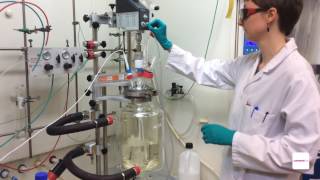
Chemists conduct experiments, analyze substances, develop new products and processes, and ensure quality control. They might work in labs, in the field, or in an office setting, depending on their specialization.
- Demand
- Growing
- Remote work
- Hybrid
- Industry
- Chemistry
Is This Career For You?
Discover if your personality matches this career
Your Personality Fit (RIASEC)
Enjoys observing, learning, investigating, analyzing, and evaluating. They are often curious, detail-oriented, and methodical.
Enjoys working with their hands, tools, and machinery, or in the outdoors. Problem-solving through practical application.
Enjoys working with data, details, and structure. They are often organized and precise.
Enjoys leading, persuading, and influencing others. They are often ambitious and energetic.
Enjoys creativity, self-expression, and working with abstract concepts and open-ended projects.
Enjoys helping, training, or providing service to others. They are often empathetic and communicative.
You'll Love This Career If...
Like what you see? Get full access.
Save this career, compare with others, and get your personalized career plan.
50,000+ students already signed up
A Day in the Life
What your typical workday looks like
Imagine a day where you get to mix, measure, and analyze different substances to uncover their secrets. You might spend your morning in a lab, meticulously following a procedure to synthesize a new compound or testing the quality of a product. In the afternoon, you could be analyzing data, writing reports, or collaborating with a team of scientists to brainstorm solutions to a complex chemical challenge. Your work is all about careful observation, critical thinking, and a deep curiosity about how the world works at a molecular level.
Myth vs Reality
Tap to reveal the truth behind common misconceptions
Skills You'll Need
Master these to excel in this career
Technical Skills
3Chemical Analysis
The process of determining the chemical composition of a substance.
Laboratory Techniques
Skills required to safely and effectively conduct experiments in a lab.
Research Skills
The ability to conduct thorough and systematic investigations.
Soft Skills
5Problem-Solving
The ability to identify, analyze, and solve complex problems.
Attention to Detail
The ability to accurately and meticulously carry out tasks.
Communication Skills
The ability to clearly convey information and ideas to others.
Teamwork
The ability to work collaboratively with others towards a common goal.
Critical Thinking
The ability to analyze facts and make reasoned judgments.
Domain Skills
2Knowledge of Chemistry
A deep understanding of chemical principles and theories.
Ethical Standards
Adherence to professional and ethical standards in scientific practice.
Tools of the Trade
Software and tools you'll work with daily
Hardware
Gas Chromatography
A tool used to separate and analyze compounds that can be vaporized without decomposition.
High-Performance Liquid Chromatography (HPLC)
Used to separate, identify, and quantify compounds in a liquid mixture.
Mass Spectrometry
Identifies chemical substances by measuring the mass-to-charge ratio of charged particles.
Spectrophotometer
Measures the intensity of light as a function of wavelength, used for quantitative analysis.
Software
Laboratory Information Management System (LIMS)
Software used to manage laboratory samples and associated data.
Statistical Analysis Software (e.g., R, Python libraries)
Tools used for analyzing experimental data, identifying trends, and building models.
Electronic Lab Notebooks (ELNs)
Digital tools for recording and managing experimental data and observations.
Want to build these skills?
Get a personalized learning roadmap and save careers that match your profile.
50,000+ students already signed up
Your Learning Path
Step-by-step guide to getting started
Build a Strong Science Foundation
Focus on your high school science classes, especially chemistry and physics. Understand the fundamental principles of matter, energy, and their interactions. Practice problem-solving in math as well.
Explore Chemistry in College
Pursue a Bachelor's degree in Chemistry or a related field. Take introductory and advanced courses in general, organic, inorganic, physical, and analytical chemistry. Get involved in undergraduate research projects.
Specialize and Gain Experience
Consider a Master's or Ph.D. for research-focused roles. Gain practical experience through internships or entry-level positions in areas like pharmaceutical research, quality control, or environmental science. Develop expertise in specific analytical techniques.
Continuous Learning and Advancement
Stay updated with the latest scientific discoveries and technologies through journals, conferences, and further training. Pursue advanced certifications or specialize in niche areas to advance into senior or leadership roles.
Career Progression
How your career will grow over time
Laboratory Assistant
EntryAssists senior chemists in laboratory experiments and data collection.
- Prepare and maintain laboratory equipment
- Assist in conducting experiments
- Record experimental data
- Clean and organize the laboratory space
Junior Chemist
EntryConducts basic experiments under supervision and maintains lab records.
- Perform routine laboratory tests
- Analyze samples using standard procedures
- Document experimental results
- Assist in preparing reports and presentations
Chemist
Mid-LevelDesigns and conducts experiments, analyzes data, and reports findings.
- Design and execute experiments
- Analyze data and interpret results
- Prepare detailed reports
- Collaborate with team members on projects
Senior Chemist
SeniorLeads complex projects, mentors junior chemists, and contributes to strategic planning.
- Lead research projects
- Mentor and train junior chemists
- Develop new experimental methods
- Contribute to strategic planning and decision-making
Principal Chemist
LeadershipOversees multiple projects, drives innovation, and influences company strategy.
- Oversee multiple research projects
- Drive innovation and development of new products
- Influence company strategy and direction
- Lead a team of chemists and researchers
Education Paths
Bachelor's Degree
B.Sc. in Chemistry
Chemistry
Master's Degree
M.Sc. in Chemistry
Chemistry
Doctoral Degree
Ph.D. in Chemistry
Chemistry
Top Hiring Companies
Salary & Future Growth
What you can earn and where the industry is headed
Salary Progression (INR)
Future Career OutlookCurrent Market: Growing
The current outlook for chemists is strong, with significant demand across various sectors like pharmaceuticals, materials science, and environmental protection. Growth is driven by innovation in areas such as sustainable chemistry, drug discovery, and advanced materials. The need for skilled chemists to develop new products, improve existing processes, and ensure safety and quality remains high.
Over the medium to long term, the job prospects for chemists are expected to remain robust. The increasing focus on sustainability, green chemistry, and the development of novel materials for renewable energy and advanced technologies will continue to fuel demand. Advancements in computational chemistry and data science are also opening new avenues for chemical research and development.
The long-term outlook for chemists is highly positive, underpinned by the fundamental role chemistry plays in addressing global challenges. From developing new medicines and sustainable energy solutions to creating advanced materials and ensuring environmental safety, chemists will continue to be essential. The field is expected to evolve with new technologies, requiring adaptability and continuous learning.
Not sure if Chemist is right for you?
Talk to a Stride counsellor for personalised guidance on whether this career fits your interests, strengths, and goals.
Watch & Learn
Curated videos to help you explore




Helpful Resources
Articles and guides for deeper learning
Frequently Asked Questions
Quick answers to common questions
QWhat kind of education do I need to become a chemist?
Typically, a bachelor's degree in chemistry or a related field is required. For research or advanced positions, a master's or doctoral degree is often necessary.
QAre there many job opportunities for chemists?
Yes, there is a consistent demand for chemists in various industries, including pharmaceuticals, materials science, environmental science, and manufacturing.
QWhat are the different types of chemists?
There are many specializations, such as organic chemists, inorganic chemists, analytical chemists, physical chemists, and biochemists, each focusing on different aspects of matter and its properties.
Explore All 1,500+ Careers
Browse our full career explorer or take an assessment to get personalised recommendations.