Data Warehousing Manager
Also known as: Data Warehouse Manager, DW Manager, Data Warehouse Lead
A Data Warehousing Manager is responsible for designing, building, and maintaining the systems that store and manage a company's data. They ensure that data is collected from various sources, cleaned, and organized in a central 'warehouse' so that it can be easily accessed and analyzed by different departments. This helps businesses understand trends, make better decisions, and improve their operations.
10
Skills to Learn
4
Career Levels
7
Top Companies
2
Education Paths
Sneak Peek
Do you enjoy organizing massive amounts of information so that it's easy to find and use, like a super-organized digital librarian? If you're fascinated by how businesses use data to make big decisions, this role might be for you!
What does a Data Warehousing Manager do?
A Data Warehousing Manager is responsible for designing, building, and maintaining the systems that store and manage a company's data. They ensure that data is collected from various sources, cleaned, and organized in a central 'warehouse' so that it can be easily accessed and analyzed by different departments.
- Salary in India
- ₹6 to ₹20 lakh a year
- Demand
- Growing
- Remote work
- Hybrid
- Industry
- Information Technology
Is This Career For You?
Discover if your personality matches this career
Your Personality Fit (RIASEC)
You are drawn to analyzing complex data and solving problems.
You have a strong preference for organization, accuracy, and systematic processes.
You'll manage projects and teams, requiring leadership and decision-making.
You enjoy working with data and systems to build and maintain structures.
You'll collaborate with teams, but direct client-facing interaction is less primary.
This role is less about creative expression and more about structured data management.
You'll Love This Career If...
Like what you see? Get full access.
Save this career, compare with others, and get your personalized career plan.
50,000+ students already signed up
A Day in the Life
What your typical workday looks like
Imagine starting your day by checking on the data flows that came in overnight – did all the sales numbers from different stores get loaded correctly? You might then meet with a marketing team to understand what new customer information they need for an upcoming campaign. Later, you could be working with your team to design a new way to store product inventory data, troubleshoot an issue with a data report, or plan for future upgrades to the data warehouse system to keep it running smoothly and efficiently.
Myth vs Reality
Tap to reveal the truth behind common misconceptions
Skills You'll Need
Master these to excel in this career
Technical Skills
6SQL
Write queries to extract and manipulate data from relational databases.
Data Warehousing
Design and implement data warehousing solutions.
ETL Processes
Develop and maintain ETL pipelines for data integration.
Big Data Technologies
Work with big data technologies like Hadoop and Spark.
Cloud Computing
Leverage cloud platforms like AWS and Azure for data solutions.
Data Architecture
Design and manage the overall structure of data systems.
Soft Skills
3Leadership
Lead a team of data engineers and analysts.
Communication
Effectively communicate technical concepts to non-technical stakeholders.
Problem-Solving
Identify and resolve complex data-related issues.
Domain Skills
1Business Acumen
Understand business objectives and align data strategies accordingly.
Tools of the Trade
Software and tools you'll work with daily
Software
SQL
Used to query and manipulate data stored in databases.
ETL Tools (e.g., Informatica, Talend)
Software used to extract data from various sources, transform it into a usable format, and load it into the data warehouse.
BI Tools (e.g., Tableau, Power BI)
Tools used to visualize and analyze the data stored in the warehouse, helping users understand trends and insights.
Platform
Data Warehouse Platforms (e.g., Snowflake, Redshift, BigQuery)
Cloud-based or on-premise systems designed for storing and analyzing large volumes of data.
Framework
Dimensional Modeling
A design approach (like star schemas) used to organize data for efficient analysis and reporting.
Want to build these skills?
Get a personalized learning roadmap and save careers that match your profile.
50,000+ students already signed up
Your Learning Path
Step-by-step guide to getting started
Understand the Basics
Start by learning what data is, how businesses use it, and the fundamental concepts of databases and data storage. Familiarize yourself with terms like 'database,' 'data,' 'information,' and 'analytics'.
Learn Data Management Fundamentals
Dive into how data is collected, cleaned, and organized. Explore concepts like data modeling, data warehousing principles, and the Extract, Transform, Load (ETL) process. Learn basic SQL for data querying.
Explore Dimensional Modeling and BI
Focus on how to structure data for analysis using dimensional modeling techniques (like star schemas). Learn about Business Intelligence (BI) concepts and common BI tools used to visualize and report on data.
Gain Practical Experience and Management Skills
Work on small projects, perhaps through internships or online courses, to apply your knowledge. Develop project management and team leadership skills, as managing a data warehouse involves coordinating people and resources.
Career Progression
How your career will grow over time
Data Analyst
EntryAssists in data collection, cleaning, and analysis.
- Collect data from various sources.
- Clean and preprocess data for analysis.
- Assist in creating reports and dashboards.
Data Warehouse Developer
Mid-LevelDevelops and maintains data warehouse systems.
- Design and implement data warehouse architectures.
- Develop ETL processes.
- Ensure data quality and integrity.
Data Warehouse Manager
SeniorManages the data warehouse team and oversees data warehousing projects.
- Lead data warehouse projects.
- Manage a team of data warehouse developers.
- Ensure alignment with business goals.
Chief Data Officer
LeadershipLeads the overall data strategy for the organization.
- Develop and implement data strategy.
- Oversee all data-related initiatives.
- Ensure compliance with data governance policies.
Education Paths
Bachelor's Degree
B.Tech
Computer Science
Master's Degree
M.Sc
Data Science
Top Hiring Companies
Salary & Future Growth
What you can earn and where the industry is headed
Salary Progression (INR)
Future Career OutlookCurrent Market: Growing
Data Warehousing Managers are crucial in today's data-driven world. They ensure that businesses can access, organize, and analyze vast amounts of information effectively. This role is vital for companies that rely on data analytics to make strategic decisions, optimize operations, and drive innovation. The demand for skilled professionals in this field is strong as businesses continue to generate and collect large datasets.
The role of a Data Warehousing Manager is expected to remain strong in the medium to long term. As technology evolves and data volumes continue to explode, the need for individuals who can manage and interpret this data will only increase. Companies will continue to invest in robust data warehousing solutions to maintain a competitive edge, ensuring continued demand for these professionals.
Looking far ahead, the fundamental need for organizing and making sense of data will persist. While the specific tools and technologies may change, the core responsibilities of a Data Warehousing Manager—ensuring data integrity, accessibility, and usability for strategic decision-making—will likely remain relevant. Adaptability and continuous learning will be key to navigating the long-term future of this role.
Not sure if Data Warehousing Manager is right for you?
Talk to a Stride counsellor for personalised guidance on whether this career fits your interests, strengths, and goals.
Watch & Learn
Curated videos to help you explore

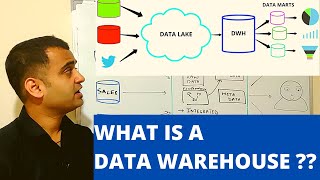

![Data Warehouse - The Ultimate Guide [2025] | Master Data Modeling](https://i.ytimg.com/vi/HKcEyHF1U00/mqdefault.jpg)
Helpful Resources
Articles and guides for deeper learning
Frequently Asked Questions
Quick answers to common questions
QWhat is the typical day-to-day work for a Data Warehousing Manager?
A Data Warehousing Manager typically oversees the design, development, and maintenance of data warehouse systems. This involves integrating data from various sources, optimizing storage for performance, ensuring data security and accuracy, and working with teams to make data accessible for analysis and strategic decision-making.
QWhat kind of education or background is needed for this role?
A strong background in Information Systems, Data Science, Computer Science, or Database Management is usually required. Many professionals also hold advanced degrees or certifications in related fields. Practical experience with data modeling, ETL processes, and database technologies is essential.
QIs this a good career choice for someone who likes solving complex problems?
Absolutely! Data Warehousing Managers constantly tackle complex challenges related to data integration, storage, performance, and security. If you enjoy dissecting intricate issues and finding efficient solutions, this career path could be a great fit.
Explore All 1,500+ Careers
Browse our full career explorer or take an assessment to get personalised recommendations.