Enterprise Architect Manager
Also known as: Enterprise Architect, Technology Strategy & Advisory Manager, Mgmt Consulting Manager
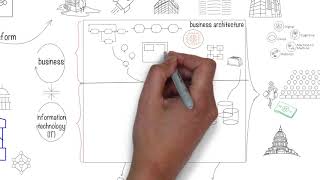
An Enterprise Architect Manager is essentially the lead city planner for a massive company’s entire technology ecosystem. They create the master blueprint that shows how all the different parts of the business—like sales, finance, and manufacturing—connect to the technology (apps, databases, and cloud services) they use. Their main job is to ensure that the company's long-term business goals are perfectly supported by a scalable, secure, and modern technology plan. This involves defining technology strategies, implementing governance models, and bridging the gap between what the business wants to achieve and what technology can deliver, ensuring the company invests wisely and stays agile.
10
Skills to Learn
4
Career Levels
2
Top Companies
2
Education Paths
Sneak Peek
Do you enjoy mapping out a complex plan, like designing a massive city where every road, building, and power line connects perfectly? An Enterprise Architect Manager does this for a massive company, not with concrete, but with technology—how cool is it to be the ultimate planner and driver of digital transformation?
What does an Enterprise Architect Manager do?
An Enterprise Architect Manager is essentially the lead city planner for a massive company’s entire technology ecosystem. They create the master blueprint that shows how all the different parts of the business—like sales, finance, and manufacturing—connect to the technology (apps, databases, and cloud services) they use.
- Salary in India
- ₹12 to ₹35 lakh a year
- Demand
- Growing
- Remote work
- Remote-Friendly
- Industry
- Information Technology
Is This Career For You?
Discover if your personality matches this career
Your Personality Fit (RIASEC)
This role requires constant analysis, research, and technical dissection of complex systems and ideas—like debunking myths about cloud performance using "consultant-grade rigor."
As a manager, you lead change, convince executives of the value of your plans, prioritize major initiatives, and translate high-level strategy into actionable technological direction.
The job involves creating detailed models (like application maps and layered diagrams), defining clear standards, and establishing governance to ensure all systems adhere to the final design.
You must communicate complex technical concepts clearly, facilitate alignment between different departments (IT and business), and create a "shared perspective" across the organization.
While highly technical, the role involves creatively designing a unified vision for a company's technology landscape and using visual modeling to communicate that vision, much like a traditional architect.
The job is primarily focused on strategic planning, modeling, and communication, not the hands-on building, installation, or maintenance of physical hardware or code.
You'll Love This Career If...
Like what you see? Get full access.
Save this career, compare with others, and get your personalized career plan.
50,000+ students already signed up
A Day in the Life
What your typical workday looks like
Your day isn't spent writing code; it's spent consulting and planning. You might start by meeting with a senior business executive to understand their five-year plan for company expansion, which is your client’s ultimate goal. Then, you spend the afternoon diagramming a new 'technology roadmap'—a master plan showing how the company will move from old, slow systems to a cutting-edge cloud setup. You lead a governance meeting to review a new architecture design proposed by a junior team, ensuring it meets security standards and fits the overall strategic blueprint. By the end of the day, you've ensured that thousands of employees will have the right tools to do their job efficiently, all thanks to your strategic vision.
Myth vs Reality
Tap to reveal the truth behind common misconceptions
Skills You'll Need
Master these to excel in this career
Technical Skills
4System Architecture
Designing and creating comprehensive architecture models.
Enterprise Tools
Proficiency in enterprise architecture tools and software.
Cloud Technologies
Knowledge of cloud platforms and services.
Security and Compliance
Ensuring systems are secure and compliant with regulations.
Soft Skills
3Team Collaboration
Working effectively with cross-functional teams.
Change Management
Managing and leading organizational changes driven by new technologies.
Communication Skills
Effectively communicating complex technical concepts to non-technical stakeholders.
Domain Skills
3Strategic Planning
Developing long-term technology strategies that align with business goals.
Business Acumen
Understanding business processes and how technology can improve them.
Project Management
Overseeing technology projects from inception to completion.
Tools of the Trade
Software and tools you'll work with daily
Framework
ArchiMate
A modeling standard, like a language for drawing architectural diagrams, used to create clear visual maps of the entire business (applications, processes, data).
API-led Integration
A crucial design principle where all parts of a system communicate using standardized connectors (APIs) to ensure modularity and flexibility, making new features easier to "plug in."
Software
AutoCAD / SketchUp
While traditional building architect tools, they serve as a great analogy for the powerful software Enterprise Architects use to create detailed digital blueprints, 3D models, and layered diagrams.
Platform
Cloud Platforms
The foundational environment (like Amazon Web Services or Microsoft Azure) used to host and run the company’s new, flexible, and scalable systems.
Want to build these skills?
Get a personalized learning roadmap and save careers that match your profile.
50,000+ students already signed up
Your Learning Path
Step-by-step guide to getting started
The Map and Compass: Understanding the 'Why'
Start by learning why big companies need an 'Enterprise Architect.' Think of it as understanding why a city needs a comprehensive zoning plan, not just individual building permits. Focus on concepts like avoiding waste, connecting business goals (strategy) to technology, and dealing with complexity. Read about how architecture acts as a "map and compass" for an organization.
Learn the Blueprint Language: Modeling and Content
An architect needs a blueprint language. In Enterprise Architecture, this is often a modeling language like ArchiMate. Learn how to draw and read diagrams that show capabilities, applications, data flows, and processes. This helps you communicate complex systems to others, making your ideas clear and visual.
From Plan to Action: Connecting Architecture to Value
Architecture is useless if it just sits on a shelf. Learn how to take your models and use them to solve real problems: prioritizing which projects get funded, choosing between a single platform and a 'Lego-style' composable system, and making the case for technology choices to business leaders.
Practice the Art of Influence and Governance
The Manager part of the job requires strong 'soft' skills. Study communication, facilitation, and governance—the rules and standards that keep the system running smoothly. The goal is to create a 'shared perspective' so everyone (IT, business leaders, developers) works together toward the same vision.
Career Progression
How your career will grow over time
Solution Architect
EntryBeginner role focused on creating and implementing specific technology solutions.
- Collaborate with teams to ensure system is built according to the designed framework.
- Convert technical requirements into architecture and design for the final product.
IT Manager
Mid-LevelMid-level role overseeing technology operations and implementation of new IT systems.
- Oversee the organization's technology operations.
- Ensure efficient resource usage and implementation of new IT systems and policies.
Enterprise Architect
SeniorSenior-level role responsible for designing and maintaining the architecture of an organization's IT systems.
- Design solutions that align technology with business objectives.
- Ensure systems are scalable, secure, and efficient.
Enterprise Architecture Manager
LeadershipLeadership role overseeing the entire IT architecture strategy and ensuring alignment with business goals.
- Lead strategic planning to align IT infrastructure with long-term business goals.
- Collaborate with senior leadership to define the technology roadmap and ensure IT strategies are integrated into the business strategy.
Education Paths
Bachelor's Degree
Computer Science
Information Technology
Master's Degree
Business Administration
Top Hiring Companies
Salary & Future Growth
What you can earn and where the industry is headed
Salary Progression (INR)
Future Career OutlookCurrent Market: Growing
The current demand for high-level architects and managers is exceptionally high, which is why salaries are very competitive. Companies are struggling to find people who possess the rare combination of deep technical expertise (especially in cloud platforms) and necessary leadership and communication skills. This immediately translates to strong job security and excellent opportunity.
As technology continues to change rapidly, this role will remain critical. The need to adapt to new trends like Generative AI and evolving compliance standards (GDPR, HIPAA) will keep the job focused on long-term strategy and governance. The role will continue to evolve, requiring a commitment to continuous learning to stay relevant.
In the very long term, the Enterprise Architecture Manager is a strategic leadership position that guides the company's entire digital vision. Because this role operates at the high-level intersection of business strategy and technology blueprint design, it is highly protected from automation and will maintain high value and influence within any organization.
Not sure if Enterprise Architect Manager is right for you?
Talk to a Stride counsellor for personalised guidance on whether this career fits your interests, strengths, and goals.
Watch & Learn
Curated videos to help you explore




Helpful Resources
Articles and guides for deeper learning
Frequently Asked Questions
Quick answers to common questions
QIs this job mainly technical, or does it involve management?
This is a highly strategic role that requires a rare combination of deep technical knowledge (like cloud architecture and system design) and strong soft skills. At the manager level, you spend less time coding and more time leading a team, communicating with executives, and translating business goals into technical blueprints.
QWhat is the expected job growth and demand for this career?
The growth outlook is strong. Related architecture roles have a projected job growth of about 20%, with companies struggling to find qualified candidates. This high demand, combined with significant annual openings, indicates a healthy and expanding career field.
QDo I need specific degrees or certifications to reach this level?
While a Bachelor's degree in Computer Science or a related field is the minimum, a Master's degree is highly valued for these senior, strategic roles. Professional certifications in enterprise architecture frameworks (like TOGAF) and major cloud platforms (AWS, Azure) are also essential for demonstrating advanced expertise.
Explore All 1,500+ Careers
Browse our full career explorer or take an assessment to get personalised recommendations.