State Civil Services Officer Group A
Also known as: State Civil Service Officer Group A, State Administrative Officer, State Group A Officer
A Group A State Civil Services Officer is a high-ranking public servant responsible for implementing government policies and programs at the state level. They play a crucial role in administration, governance, and public welfare, overseeing various departments and ensuring the smooth functioning of the state machinery. This role involves decision-making, problem-solving, and managing resources to serve the public effectively.
10
Skills to Learn
5
Career Levels
2
Top Companies
2
Education Paths
Sneak Peek
Do you dream of making a real difference in your community and shaping the future of your state? Ever wondered what it takes to be at the heart of public service, leading initiatives that impact thousands of lives?
What does a State Civil Services Officer Group A do?
A Group A State Civil Services Officer is a high-ranking public servant responsible for implementing government policies and programs at the state level. They play a crucial role in administration, governance, and public welfare, overseeing various departments and ensuring the smooth functioning of the state machinery.
- Salary in India
- ₹7 to ₹15 lakh a year
- Demand
- Growing
- Remote work
- Location-Bound
- Industry
- Public Administration
Is This Career For You?
Discover if your personality matches this career
Your Personality Fit (RIASEC)
This is a core aspect, as civil servants work directly with people, communities, and stakeholders to serve the public.
A strong investigative nature is valuable for analyzing complex issues, understanding societal problems, and finding data-driven solutions.
Leadership, persuasion, and the ability to manage projects and people are crucial for driving administrative tasks and public initiatives.
You enjoy hands-on work and practical problem-solving, which is essential when implementing policies and managing on-ground operations.
Attention to detail, organization, and adherence to procedures are important for maintaining records, following regulations, and ensuring smooth administrative functioning.
While not the primary focus, creativity can be useful in developing innovative solutions for public administration and communication.
You'll Love This Career If...
Like what you see? Get full access.
Save this career, compare with others, and get your personalized career plan.
50,000+ students already signed up
A Day in the Life
What your typical workday looks like
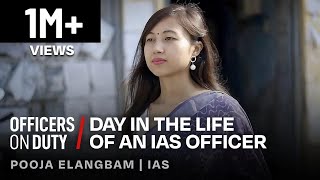
A typical day might involve attending important administrative meetings, reviewing and approving project proposals, interacting with citizens to address their concerns, drafting policy recommendations, and managing a team of subordinates. You could be inspecting a public work project in the morning, followed by a crucial decision-making session in the afternoon, and perhaps attending a public grievance redressal forum in the evening.
Myth vs Reality
Tap to reveal the truth behind common misconceptions
Skills You'll Need
Master these to excel in this career
Technical Skills
2Project Management
Organizing and managing projects efficiently.
Data Analysis
Interpreting data to inform decisions.
Soft Skills
5Communication Skills
Effectively conveying information and ideas.
Decision-Making
Analyzing situations and making informed choices.
Ethical Conduct
Adhering to moral principles in professional settings.
Problem-Solving
Identifying and resolving issues effectively.
Interpersonal Skills
Building and maintaining professional relationships.
Domain Skills
3Policy Formulation
Understanding and creating government policies.
Public Administration
Managing and overseeing government operations.
Legal Knowledge
Understanding and applying legal principles.
Tools of the Trade
Software and tools you'll work with daily
Software
Detailed Application Form (DAF)
A crucial document containing your personal and academic details that you must be prepared to discuss thoroughly during the interview.
Platform
Newspapers and reliable news sources
Essential for staying updated with current affairs, forming balanced opinions, and demonstrating awareness and analytical skills.
Mock Interview platforms/sessions
Simulate real interview scenarios to practice responses, body language, and receive constructive feedback to improve performance and confidence.
Framework
Syllabus and Previous Year's Questions (PYQs)
A strategic blueprint that guides your preparation, helping you understand what to study, what to ignore, and how to approach topics.
Want to build these skills?
Get a personalized learning roadmap and save careers that match your profile.
50,000+ students already signed up
Your Learning Path
Step-by-step guide to getting started
Understand the Basics of Governance and Administration
Start by learning how governments work at different levels (central, state, local). Explore the basic structure of the Indian Constitution and key government institutions. Think about how policies are made and implemented.
Build Foundational Knowledge in Key Subjects
Dive into subjects like Indian Polity, Economy, History, Geography, and Environment. Focus on understanding core concepts rather than memorizing facts. Read newspapers daily to connect these subjects with current events.
Develop Analytical and Writing Skills
Practice answering questions from previous years' exams, especially for the Mains stage. Focus on structuring your answers, providing relevant examples, and developing your critical thinking. Learn to balance depth and brevity.
Prepare for the Personality Test
Understand that this stage assesses your personality, not just knowledge. Work on your communication skills, body language, and confidence. Participate in mock interviews to get feedback and refine your approach. Be ready to discuss your DAF (Detailed Application Form).
Career Progression
How your career will grow over time
Probationer
EntryNewly recruited officers undergo a probationary period where they receive training and orientation.
- Attend training programs
- Observe and learn from senior officers
- Assist in administrative tasks
Assistant Collector
EntryOfficers start their career by handling specific administrative duties and learning the ropes of the job.
- Manage revenue collection
- Implement government policies
- Handle district-level administration
Sub-Divisional Magistrate
Mid-LevelOfficers take on more responsibilities and manage larger administrative units.
- Oversee sub-divisional administration
- Handle law and order
- Implement development programs
District Collector
SeniorOfficers manage entire districts, overseeing all administrative functions and implementing policies.
- Manage district administration
- Oversee revenue collection
- Implement government schemes
Principal Secretary
LeadershipOfficers reach the highest levels of administration, influencing policy and governance at the state level.
- Formulate and implement state policies
- Coordinate with other departments
- Provide strategic guidance to the government
Education Paths
Bachelor's Degree
Any Discipline
Post-Secondary Certificate/Diploma
UPSC Preparation
Top Hiring Companies
Salary & Future Growth
What you can earn and where the industry is headed
Salary Progression (INR)
Future Career OutlookCurrent Market: Growing
State Civil Services Officers (Group A) play a crucial role in the administration and implementation of government policies at the state level. Their work involves a wide range of responsibilities, from policy formulation and execution to public service delivery and maintaining law and order. The demand for dedicated and ethical officers remains consistently high.
As India continues its development trajectory, the need for efficient and effective administration at the state level will only grow. Group A officers are at the forefront of driving this progress, making it a stable and impactful career. Opportunities for leadership and specialization will expand.
The long-term outlook for State Civil Services Officers (Group A) is very positive. With evolving governance needs and a focus on citizen-centric services, experienced officers will continue to be vital in shaping public policy and administration. Their roles will adapt to new challenges, ensuring continued relevance and demand.
Not sure if State Civil Services Officer Group A is right for you?
Talk to a Stride counsellor for personalised guidance on whether this career fits your interests, strengths, and goals.
Watch & Learn
Curated videos to help you explore





Helpful Resources
Articles and guides for deeper learning
Frequently Asked Questions
Quick answers to common questions
QWhat is the typical career progression for a Group A civil servant?
The career progression typically starts as a Sub-Divisional Magistrate or equivalent, moving up through various administrative and departmental positions, potentially reaching secretary-level positions in state government departments.
QWhat are the key challenges faced by a Group A civil servant?
Challenges include navigating complex bureaucratic processes, managing diverse public expectations, handling political pressures, and ensuring efficient service delivery across different regions.
QHow does one prepare for the civil services examination?
Preparation involves rigorous study of the syllabus, consistent answer writing practice, staying updated on current affairs, and often, joining coaching programs.
Explore All 1,500+ Careers
Browse our full career explorer or take an assessment to get personalised recommendations.