Atmospheric Scientist / Climatologist
Also known as: meteorologist, climate scientist
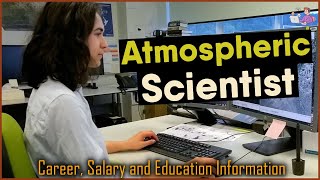
Atmospheric scientists and climatologists study the Earth's atmosphere, weather patterns, and climate. They use scientific principles and advanced tools to understand and predict atmospheric phenomena, from daily weather forecasts to long-term climate change trends. Their work involves analyzing complex data, developing sophisticated models, and communicating findings to help society prepare for and adapt to various atmospheric conditions.
6
Skills to Learn
4
Career Levels
9
Top Companies
3
Education Paths
Sneak Peek
Ever wondered why some summers are hotter than others, or how we can predict the path of a hurricane days in advance? If you're fascinated by the forces that shape our weather and climate, a career as an atmospheric scientist or climatologist might be your calling.
What does an Atmospheric Scientist / Climatologist do?
Atmospheric scientists and climatologists study the Earth's atmosphere, weather patterns, and climate. They use scientific principles and advanced tools to understand and predict atmospheric phenomena, from daily weather forecasts to long-term climate change trends. Their work involves analyzing complex data, developing sophisticated models, and communicating findings to help society prepare for and adapt to various atmospheric conditions.
- Salary in India
- ₹4 to ₹12 lakh a year
- Demand
- Growing
- Remote work
- Hybrid
- Industry
- Information Technology
Is This Career For You?
Discover if your personality matches this career
Your Personality Fit (RIASEC)
You love digging deep into data, solving complex puzzles, and understanding the 'why' behind scientific phenomena.
You have a creative side that enjoys visualizing data and communicating complex ideas in compelling ways.
You don't mind hands-on work or being outdoors occasionally, but your primary focus is on analysis and research.
You enjoy sharing your findings and collaborating with others, but the core of your work is scientific.
You appreciate structured processes and data organization, but your passion lies more in discovery than strict routine.
While you can present your findings, leading teams or complex sales isn't your main driver.
You'll Love This Career If...
Like what you see? Get full access.
Save this career, compare with others, and get your personalized career plan.
50,000+ students already signed up
A Day in the Life
What your typical workday looks like
A typical day might involve analyzing satellite imagery and weather data, running complex climate models on supercomputers, collaborating with other scientists on research projects, and writing reports or presenting findings. You could be working on anything from predicting the next week's weather to modeling the potential impacts of climate change over the next century.
Myth vs Reality
Tap to reveal the truth behind common misconceptions
Skills You'll Need
Master these to excel in this career
Technical Skills
3Data Analysis
Interpreting complex data sets to draw meaningful conclusions.
Programming Skills
Writing and debugging code to analyze data and create models.
Meteorological Tools Proficiency
Using software and instruments to collect and analyze weather data.
Soft Skills
2Critical Thinking
Evaluating information and arguments in a logical and systematic way.
Communication Skills
Presenting findings and recommendations effectively to various audiences.
Domain Skills
1Climatology Knowledge
Understanding the science of climate and its variations.
Tools of the Trade
Software and tools you'll work with daily
Software
Computer Programming (Python, R)
Used for analyzing large datasets, running simulations, and visualizing results.
Data Visualization Tools
Helps in creating charts, graphs, and maps to understand and present complex atmospheric data.
Numerical Weather Prediction (NWP) Models
Sophisticated computer programs that simulate atmospheric processes to forecast weather and climate.
Geographic Information Systems (GIS)
Used for mapping and analyzing spatial data related to weather patterns and environmental factors.
Hardware
Satellites and Radar
Essential for collecting real-time atmospheric data from various altitudes and locations.
Weather Stations and Sensors
Ground-based instruments that measure temperature, pressure, humidity, wind, and other atmospheric conditions.
Want to build these skills?
Get a personalized learning roadmap and save careers that match your profile.
50,000+ students already signed up
Your Learning Path
Step-by-step guide to getting started
High School Foundations
Focus on taking challenging math (algebra, calculus) and science (physics, chemistry, earth science) classes. Develop strong reading and writing skills to communicate your ideas clearly.
Bachelor's Degree Basics
Earn a Bachelor's degree in Atmospheric Science, Meteorology, Environmental Science, or a related field. Take courses in physics, calculus, differential equations, and introduction to programming.
Advanced Studies and Specialization
Consider a Master's degree for specialized roles in research or climate modeling. Focus on areas like atmospheric dynamics, data analysis, or climate change science. Gain practical experience through internships with agencies like NOAA or NASA.
Mastering Your Craft
Pursue a Ph.D. for independent research or university positions. Continue to build expertise in data analysis, programming, and scientific communication. Stay updated with the latest research and technologies in atmospheric and climate science.
Career Progression
How your career will grow over time
Junior Atmospheric Scientist
EntryAssists in data collection and analysis under supervision.
- Data collection
- Basic analysis
- Assisting senior scientists
Atmospheric Scientist
Mid-LevelConducts independent research and data analysis.
- Research
- Data analysis
- Reporting findings
Senior Atmospheric Scientist
SeniorLeads projects and teams, oversees research initiatives.
- Project management
- Team leadership
- Advanced research
Chief Atmospheric Scientist
LeadershipDirects overall strategy and research direction for the department.
- Strategic planning
- Department oversight
- Policy influence
Education Paths
Bachelor's Degree
Meteorology
Atmospheric Sciences
Master's Degree
Doctoral Degree
Top Hiring Companies
Salary & Future Growth
What you can earn and where the industry is headed
Salary Progression (INR)
Future Career OutlookCurrent Market: Growing
Atmospheric scientists and climatologists are in demand as understanding and predicting climate change becomes increasingly critical. This field involves analyzing complex data to understand weather patterns, climate trends, and their impacts. The work is essential for developing strategies to mitigate and adapt to climate change, making it a field with significant current relevance.
The long-term outlook for atmospheric scientists and climatologists is very positive. As the impacts of climate change become more pronounced, the need for experts who can analyze climate data, model future scenarios, and advise on policy will only grow. This field is projected to expand significantly as societies worldwide grapple with environmental challenges and strive for sustainability.
Looking far into the future, atmospheric scientists and climatologists will remain vital. Their expertise will be crucial for understanding long-term climate shifts, developing innovative solutions for environmental challenges, and ensuring the resilience of communities. The continuous evolution of climate science and the persistent need for climate action suggest a stable and growing demand for these professionals.
Not sure if Atmospheric Scientist / Climatologist is right for you?
Talk to a Stride counsellor for personalised guidance on whether this career fits your interests, strengths, and goals.
Watch & Learn
Curated videos to help you explore



Helpful Resources
Articles and guides for deeper learning
Frequently Asked Questions
Quick answers to common questions
QWhat is the difference between an atmospheric scientist and a climatologist?
Atmospheric scientists study the Earth's atmosphere, including weather patterns and phenomena. Climatologists are a type of atmospheric scientist who specifically focus on long-term weather patterns and climate change.
QWhat kind of education do I need to become an atmospheric scientist or climatologist?
Typically, you'll need at least a bachelor's degree in atmospheric science, meteorology, physics, or a related field. Many positions, especially in research, require a master's or Ph.D.
QWhat are some of the biggest challenges in this field?
One of the biggest challenges is the complexity of climate systems, which are constantly changing and influenced by many factors. Communicating complex scientific findings to the public and policymakers can also be challenging.
Explore All 1,500+ Careers
Browse our full career explorer or take an assessment to get personalised recommendations.