District Nurse
Also known as: Community Nurse, Public Health Nurse
A District Nurse is a registered healthcare professional who provides nursing care to individuals and families in their own homes and local communities. They work with patients of all ages who have a variety of health conditions, from acute illnesses to chronic diseases, and also support those needing end-of-life care. Their role is crucial in helping people stay independent and healthy in familiar surroundings, bridging the gap between hospital care and home life.
8
Skills to Learn
4
Career Levels
3
Top Companies
2
Education Paths
Sneak Peek
Do you enjoy helping people and want to make a real difference in your community, right from their homes? Imagine being a healthcare hero who brings care directly to patients, ensuring they get the support they need without always having to go to a hospital.
What does a District Nurse do?
A District Nurse is a registered healthcare professional who provides nursing care to individuals and families in their own homes and local communities. They work with patients of all ages who have a variety of health conditions, from acute illnesses to chronic diseases, and also support those needing end-of-life care.
- Salary in India
- ₹4 to ₹8 lakh a year
- Demand
- Growing
- Remote work
- Hybrid
- Industry
- Healthcare
Is This Career For You?
Discover if your personality matches this career
Your Personality Fit (RIASEC)
Enjoys helping others and working in teams.
Likes to solve problems and gather information.
Prefers hands-on work and practical tasks.
Appreciates organization and following procedures.
Enjoys leading and persuading others.
Likes creative expression and innovation.
You'll Love This Career If...
Like what you see? Get full access.
Save this career, compare with others, and get your personalized career plan.
50,000+ students already signed up
A Day in the Life
What your typical workday looks like
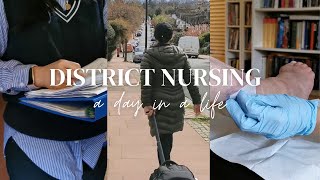
Your day as a District Nurse often starts with reviewing your patient list and planning your route. You might begin by visiting an elderly patient to change a dressing or administer medication, followed by checking on a new mother and baby to offer support and advice. Later, you could be assessing a patient recently discharged from the hospital to ensure their recovery is going smoothly at home, or providing comfort and care to someone with a long-term illness. Throughout the day, you
Myth vs Reality
Tap to reveal the truth behind common misconceptions
Skills You'll Need
Master these to excel in this career
Technical Skills
2Clinical Skills
Proficient in various nursing procedures and patient care techniques.
Documentation Skills
Accurate recording of patient information and care plans.
Soft Skills
5Communication Skills
Effective verbal and written communication with patients, families, and healthcare teams.
Empathy
Ability to understand and share the feelings of patients.
Critical Thinking
Ability to assess situations and make informed decisions.
Team Collaboration
Working effectively with other healthcare professionals.
Time Management
Efficiently managing time to prioritize patient care and administrative tasks.
Domain Skills
1Community Health Knowledge
Understanding of community health issues and public health strategies.
Tools of the Trade
Software and tools you'll work with daily
Software
Electronic Health Records (EHR) Software
Used to document patient information, track care plans, and communicate with other healthcare providers.
Hardware
Mobile Devices (Tablets/Smartphones)
Used for accessing EHRs, communicating, and managing schedules while in the field.
Medical Supplies Kit
Contains essential items for wound care, injections, and other medical procedures.
Vehicle
Essential for traveling between patient appointments in the community.
Want to build these skills?
Get a personalized learning roadmap and save careers that match your profile.
50,000+ students already signed up
Your Learning Path
Step-by-step guide to getting started
High School Foundation
Focus on science subjects like biology and chemistry, and develop strong communication and problem-solving skills.
Nursing Education
Complete a Bachelor of Science in Nursing (BSc Nursing) or a similar accredited nursing program. This typically takes 4 years and includes both theoretical knowledge and practical clinical experience.
Gain Clinical Experience
Work as a registered nurse in a hospital or other healthcare setting for a few years to build hands-on experience in patient care. Specializing in areas like medical-surgical nursing or community health can be beneficial.
District Nursing Specialization
Seek opportunities or certifications in community health nursing or district nursing. This may involve further on-the-job training, mentorship, or specialized courses focusing on home-based care and public health.
Career Progression
How your career will grow over time
Registered Nurse
EntryBeginner nurse providing direct patient care under supervision.
- Administer medications
- Monitor patient vitals
- Assist with personal care
- Document patient care
District Nurse
Mid-LevelNurse specializing in community health services.
- Conduct home visits
- Provide health education
- Manage chronic conditions
- Collaborate with healthcare teams
Senior District Nurse
SeniorExperienced nurse leading district nursing teams.
- Oversee nursing staff
- Develop community health programs
- Ensure quality care
- Mentor junior nurses
District Nursing Manager
LeadershipLeader managing district nursing services.
- Strategic planning
- Budget management
- Policy development
- Stakeholder engagement
Education Paths
Bachelor's Degree
B.Sc Nursing
Nursing
Master's Degree
MSN
Nursing
Top Hiring Companies
Salary & Future Growth
What you can earn and where the industry is headed
Salary Progression (INR)
Future Career OutlookCurrent Market: Growing
Registered nurses (RNs) are in high demand, with job growth projected to be faster than the average for all occupations. This demand is driven by an aging population, increased prevalence of chronic conditions, and a shortage of physicians. Various settings, including hospitals, outpatient care centers, and residential care facilities, are experiencing this demand.
The demand for RNs is expected to remain strong in the medium to long term, with continued growth driven by demographic shifts and healthcare needs. Specialties like long-term care, home health, and mental health are projected to see significant expansion.
The long-term outlook for registered nurses remains positive, with evolving healthcare needs and an aging population ensuring a consistent demand for their services. Advances in healthcare technology and a focus on preventative care may also shape future roles.
Not sure if District Nurse is right for you?
Talk to a Stride counsellor for personalised guidance on whether this career fits your interests, strengths, and goals.
Watch & Learn
Curated videos to help you explore




Helpful Resources
Articles and guides for deeper learning
Frequently Asked Questions
Quick answers to common questions
QWhat is the difference between a registered nurse (RN) and a nurse practitioner (NP)?
An RN provides direct patient care, coordinates care plans, and educates patients. An NP is an advanced practice registered nurse who can diagnose illnesses, prescribe medication, and manage patient care more autonomously, often with a focus on a specific patient population.
QWhat are the educational requirements to become a registered nurse?
To become a registered nurse, you typically need to complete an associate's degree in nursing (ADN), a bachelor of science in nursing (BSN), or a diploma from an approved nursing program. All registered nurses must be licensed.
QWhat are some common specializations for registered nurses?
Registered nurses can specialize in many areas, including critical care, pediatrics, oncology, mental health, public health, and geriatrics. Some nurses also focus on specific patient groups or conditions, like cardiovascular or neonatal nursing.
Explore All 1,500+ Careers
Browse our full career explorer or take an assessment to get personalised recommendations.