His story is built from habits, not magic. Raul John Aju started with video editing at nine, built a robot for a school science fair, taught what he learned to anyone who would listen, and kept going to school the whole time. Any student can copy those habits, and any parent can make room for them. Five lessons stand out.
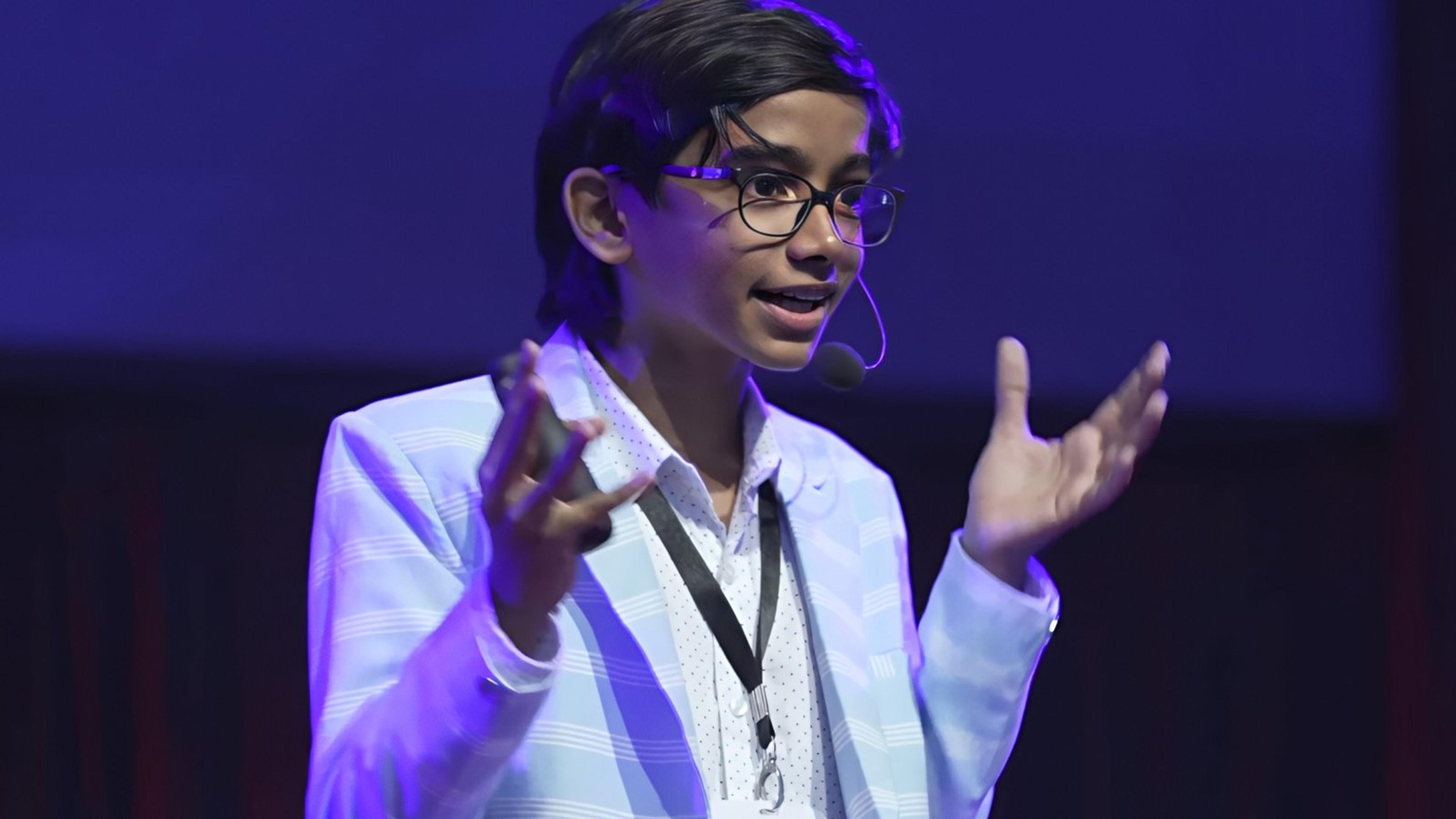
This week he was in the news because of a question. At the AI Journey conference in Moscow on 26 November 2026, Russia's President Vladimir Putin asked him whether young people who get every answer from AI will stop thinking for themselves. His reply went viral. But the meeting is the least useful part of his story. The eight years before it are the part worth studying.
Who is Raul John Aju?
He's a 17-year-old from Kochi, in Kerala, India, who is in Class 12 at a government school, studying commerce. UN News reports that he founded AI Realm Technologies, built a tool that tells people what to do and which laws apply in an emergency, and has advised the Kerala and Dubai governments on using AI in public services. People call him the "AI Kid of India".
The order things happened in is what matters:
- Around 9: video editing, which led him to technology.
- About 12: MeBot, a robot that answers questions in his voice, built for a school science fair.
- Early 2024, in Class 9: teaching online classes on AI to children at a school in the US.
- 2024 and 2025: talks at tech events and conferences, alongside school and board exams.
- 2026: a growing company, a meeting with the UN Secretary-General and, at 17, Moscow.
How did Raul John Aju get started?
With video editing, not AI. "I discovered technology through video editing," he told UN News. When his father got a job at Adobe, Raul got free access to premium tools, and one interest led to the next.
For students, that's the first lesson: you don't have to start with the "right" subject. Start with whatever you're already curious about and follow it one step further. For parents, be honest about what helped him. Access mattered. Many good tools are free now, but a child still needs an adult who notices an interest and makes room for it.
Research suggests it helps to see interests as something you build rather than find. In five studies by psychologists at Stanford and Yale-NUS, students who believed interests are fixed, waiting to be discovered, lost interest faster when a new topic got hard. They were short studies with university students, so treat it as a useful idea, not a law. Raul's own advice is to "follow your passion, not money". I'd put it slightly differently: grow the interest you've already got.
Why do school projects matter more than they look?
Because that's where his first real thing came from. MeBot began as a project for the science fair at his government school in Edappally. Kerala Kaumudi reported that it took months of effort, a classmate helped build its body, and it answers questions in Raul's voice when he isn't there.
That's not a lab with a big budget. It's a science fair, a friend and a deadline. And it gave him something a mark sheet can't: a working thing he could show people. When a family treats the class project as a distraction from "real" study, it may be cutting off the very place a child's direction first shows up.
The world of work is moving the same way. The World Economic Forum's Future of Jobs Report 2025, built on a survey of more than 1,000 employers, expects about two-fifths of workers' existing skills to change or go out of date between 2025 and 2030. Analytical thinking is still the core skill employers want most, and creative thinking, curiosity and lifelong learning are rising. A project shows those in a way a percentage can't.
Does teaching others help you learn?
Yes, and Raul started early. In January 2024, as a Class 9 student, he was teaching online classes about AI to children at a school in the US over Google Meet, according to the same Kerala Kaumudi report. His YouTube channel came after people started listening to him explain technology. In late 2024 he told The Telegraph he was planning a session on AI for his own teachers.
The research is encouraging. A 2018 review of 28 studies found that students who prepared to teach learned more than students who simply studied, and those who then actually taught learned more still, including on tests taken later. Interactive teaching, where you answer questions rather than just present, helped most.
You don't need an audience of thousands. Explain this week's chemistry to a younger cousin, or record two minutes on how you solved a maths problem. If you can't explain it simply, you've found the gap to work on.
Can a teenager chase a passion and still do well at school?
Raul's answer is yes, with plenty of ordinary effort. In late 2024 he described his day to The Telegraph: up around 5am, Malayalam tuition, school, science tuition in the evening, and technology fitted around all of it. He was preparing for his board exams at the time. "I am also a student. It's not difficult to have both," he said.
He has also argued that "we need to follow skills and creativity, not marks and degrees", as he told the India Today South Conclave in 2025. I agree that marks shouldn't be the only measure of a young person. But notice that he didn't drop school to prove the point. He's finishing Class 12. Skills and marks aren't enemies.
And look at his stream. He studies commerce and works in AI. The subject list on a school form doesn't decide what a teenager can get good at.
How does he think students should use AI?
As a tool you earn the right to use. This is where Moscow comes in. When Putin asked whether AI would stop young people thinking, Raul compared it to a calculator. "In India today, up until tenth grade, we are not supposed to use calculators so we can learn maths," he said, according to the official transcript. Learn the basics yourself, then learn how AI can help.
The evidence agrees. In a field experiment in high-school maths classes, students did better with an AI chatbot during practice but worse once it was taken away. A version that gave hints instead of answers reduced the harm. We've written more on how to tell whether AI is helping you learn.
He's no cheerleader for hype, either. At the Business Today AI Summit 2025 he told would-be founders to "solve boring, expensive problems". And he keeps coming back to one line: "The most important skill in the world of AI is to be as human as possible."
What should parents take from his story?
The habits, not the headlines. The viral parts are the selfie with Putin and the reports that he pays his father a salary to work at his company. Underneath is something ordinary: a father who shared his tools and later his experience, a government school where a science-fair robot could happen, and a teenager allowed to spend evenings on something that wasn't on the syllabus.
This week, ask your child what they'd make if they had a free weekend, and help them make a small version of it. Treat the next school project as a chance to build something they can show. Ask them to teach you one thing they learned. And please don't hold Raul up as the bar. Most children won't run a company at 16, and they don't need to. In my experience, comparing a child with someone on a world stage shrinks their confidence faster than it grows their curiosity.
If you're a student, keep it simple: pick one interest, make one thing, and teach it to one person.
Not sure what your child is curious about yet?
Raul found his way in through video editing. Plenty of teenagers haven't found theirs yet, and that's normal. For students in Grades 9 to 12, Stride Ahead's Career Interest Inventory maps what you enjoy doing to fields and careers worth exploring. Treat it as the start of a conversation, not a verdict.
Sources
- UN News, 'AI Kid of India' urges young people to embrace technology, February 2026.
- Kerala Kaumudi, Schoolboy from Edappally taking classes for American students, 7 January 2024.
- The Telegraph (t2 Online), Raul John Aju is 14 years old and is the AI prodigy you need to know about, 28 November 2024.
- Business Today, At 16, Kerala's AI prodigy hires father for startup, 11 September 2025 (India Today South Conclave).
- Business Today, BT AI Summit 2025 talk, 29 October 2025.
- Onmanorama, Meet Kerala's 16-year-old AI kid who runs a start-up, 17 August 2026.
- Business Today, Meet Raul John Aju, the teen who pays his father to work at his AI startup, 28 August 2026.
- President of Russia (kremlin.ru), Meeting with young AI talents, transcript, 26 November 2026. Its introduction gives his age as 17.
- O'Keefe, Dweck and Walton, Psychological Science, Implicit theories of interest: finding your passion or developing it?, October 2018.
- Kobayashi, Japanese Psychological Research, Learning by preparing-to-teach and teaching: a meta-analysis, August 2018.
- World Economic Forum, Future of Jobs Report 2025, January 2025.
- Bastani and colleagues, PNAS, Generative AI without guardrails can harm learning, 25 June 2025.
- Cover photo: Raultherockstar via Wikimedia Commons, Raul John Aju, February 2025, licensed under CC BY-SA 4.0 (cropped).