Ophthalmologist
Also known as: eye doctor, oculist
An ophthalmologist is a medical doctor who specializes in eye and vision care. They are trained to perform eye exams, diagnose and treat eye diseases, prescribe medications, and perform eye surgery. Ophthalmologists can also conduct research to find new ways to prevent and treat vision problems.
10
Skills to Learn
4
Career Levels
3
Top Companies
3
Education Paths
Sneak Peek
Ever wondered how doctors can perform surgery on something as delicate as the human eye? Aspiring to be a detective for vision problems and a surgeon for sight itself?
Is This Career For You?
Discover if your personality matches this career
Your Personality Fit (RIASEC)
You enjoy solving complex problems and using scientific knowledge to understand how things work.
You like helping others and find satisfaction in improving people's lives.
You prefer hands-on activities and working with tangible things, like medical instruments or the human eye.
You value order and structure, which is important for following medical protocols and maintaining detailed records.
You appreciate aesthetics and creative expression, which can be relevant in precise surgical procedures.
You enjoy leading and persuading others, which might be less central to the day-to-day of an ophthalmologist.
You'll Love This Career If...
Like what you see? Get full access.
Save this career, compare with others, and get your personalized career plan.
50,000+ students already signed up
A Day in the Life
What your typical workday looks like
A typical day for an ophthalmologist involves a mix of seeing patients in clinics for routine check-ups and complex eye conditions, performing delicate surgeries like cataract removal or retinal repair, and sometimes participating in research or teaching. You might start your day examining patients, followed by a few hours in the operating room, and then finish by reviewing test results and planning treatments.
Myth vs Reality
Tap to reveal the truth behind common misconceptions
Skills You'll Need
Master these to excel in this career
Technical Skills
3Surgical precision
The ability to perform delicate surgical techniques and procedures with accuracy and confidence.
Analytical thinking
Diagnosing complex eye conditions and determining the best treatment options requires strong analytical and problem-solving skills.
Attention to detail
Ensuring no aspect of a patient’s condition is overlooked during diagnosis or surgery.
Soft Skills
6Communication skills
Explaining diagnoses, treatments, and procedures to patients in an easy-to-understand manner while addressing their concerns.
Empathy and patience
Providing compassionate care to patients dealing with vision loss or chronic eye diseases.
Adaptability
Staying updated on the latest advancements in ophthalmic techniques and adopting new technologies.
Time management
Balancing patient consultations, surgeries, and administrative responsibilities efficiently.
Team collaboration
Working closely with nurses, optometrists, and other healthcare providers to deliver comprehensive care.
Leadership and mentorship
Guiding junior doctors and medical students in clinical and surgical training.
Domain Skills
1Medical knowledge
A comprehensive understanding of medical sciences, anatomy, and the complexities of the human eye.
Tools of the Trade
Software and tools you'll work with daily
Hardware
Ophthalmoscope
Used to look inside the eyes, at the retina, optic disc, and macula.
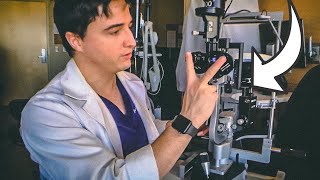
Slit Lamp
A microscope with a bright light, used to examine the front and internal structures of the eye.
Tonometer
Measures the pressure inside your eyes, helping to detect glaucoma.
Surgical Microscope
Magnifies the eye during delicate surgical procedures.
Excimer Laser
Used in laser eye surgery (like LASIK) to reshape the cornea.
Software
Electronic Health Records (EHR) System
Digital versions of patient charts, used to store and manage patient medical information and history.
Diagnostic Imaging Software
Software used to analyze images like OCT scans or retinal photos to help diagnose conditions.
Want to build these skills?
Get a personalized learning roadmap and save careers that match your profile.
50,000+ students already signed up
Your Learning Path
Step-by-step guide to getting started
Build a Strong Science Foundation
Focus on biology, chemistry, and physics in high school. These subjects are the building blocks for understanding the human body and medical science.
Complete a Bachelor's Degree
Earn a 4-year degree, typically in a science-related field like biology or pre-medicine. Excel in your coursework and gain relevant experience through volunteering or internships.
Attend Medical School
Complete 4 years of medical school to earn an MD (Doctor of Medicine) or DO (Doctor of Osteopathic Medicine) degree. This is where you'll learn the fundamentals of medicine and patient care.
Complete an Ophthalmology Residency
After medical school, you'll undertake a 3-4 year residency program specifically in ophthalmology, where you'll gain hands-on experience in diagnosing and treating eye conditions, including performing surgeries.
Career Progression
How your career will grow over time
Ophthalmology Resident
EntryA doctor undergoing specialized training in ophthalmology.
- Assisting in surgeries
- Conducting eye exams
- Learning about eye diseases
Junior Ophthalmologist
Mid-LevelA qualified eye doctor beginning their career.
- Performing basic surgeries
- Diagnosing eye conditions
- Prescribing corrective lenses
Senior Ophthalmologist
SeniorAn experienced eye doctor with advanced skills.
- Performing complex surgeries
- Leading a medical team
- Researching new treatments
Ophthalmology Department Head
LeadershipA top-level eye doctor managing an entire department.
- Overseeing department operations
- Mentoring junior doctors
- Contributing to medical policy
Education Paths
Bachelor's Degree
N/A
N/A
Doctoral Degree
N/A
N/A
Post-Doctoral
N/A
N/A
Top Hiring Companies
Salary & Future Growth
What you can earn and where the industry is headed
Salary Progression (INR)
Future Career OutlookCurrent Market: Stable
Ophthalmology, as a general field, is projected to experience stable demand. As a subspecialty like vitreoretinal disease, the demand is also expected to be strong, with growth as fast as the average for physicians and surgeons. The aging population and the increasing prevalence of conditions like diabetes contribute to a steady need for eye care specialists.
The demand for ophthalmologists is expected to remain stable to growing in the medium to long term. Technological advancements in eye care, including surgical robotics and advanced imaging, will continue to shape the field. The increasing prevalence of age-related eye conditions and chronic diseases like diabetes will ensure a consistent need for specialized eye care professionals.
The long-term outlook for ophthalmology remains positive, driven by demographic trends and advancements in medical technology. While AI may augment certain diagnostic tasks, the need for skilled surgeons and clinicians to interpret complex cases and perform delicate procedures will persist. The field is likely to see continued innovation, maintaining its importance in healthcare.
Not sure if Ophthalmologist is right for you?
Talk to a Stride counsellor for personalised guidance on whether this career fits your interests, strengths, and goals.
Explore Related Careers
Similar paths you might also enjoy
Watch & Learn
Curated videos to help you explore




Helpful Resources
Articles and guides for deeper learning
Frequently Asked Questions
Quick answers to common questions
QWhat is the difference between an ophthalmologist and an optometrist?
An ophthalmologist is a medical doctor (MD or DO) who specializes in eye and ear, nose, and throat (ENT) medicine. They can perform eye exams, diagnose and treat diseases, prescribe medications, and perform surgery. An optometrist (OD) is a vision professional who provides primary vision care, including eye exams, vision testing, and prescribing corrective lenses. They do not perform surgery.
QWhat is a vitreoretinal disease physician?
A vitreoretinal disease physician is a highly specialized ophthalmologist who focuses on diagnosing and treating complex conditions of the retina and vitreous, the parts at the back of the eye responsible for vision. They often perform intricate surgeries to save or restore sight.
QCan AI replace ophthalmologists?
While AI can assist in diagnosing certain eye conditions through image analysis, it is not expected to replace ophthalmologists. The complex surgical procedures, patient consultations, and interpretation of nuanced medical conditions require human expertise and judgment.
Explore All 1,500+ Careers
Browse our full career explorer or take an assessment to get personalised recommendations.