Dermatologist
Also known as: Dermatologist
A skin specialist, more formally known as a dermatologist, is a medical doctor who focuses on diagnosing and treating conditions related to the skin, hair, and nails. They help patients with a wide range of issues, from common problems like acne and eczema to more serious conditions such as skin cancer. Dermatologists not only prescribe medications and topical treatments but also perform procedures like biopsies, laser treatments, and minor surgeries to improve their patients' health and appearance.
8
Skills to Learn
4
Career Levels
5
Top Companies
2
Education Paths
Sneak Peek
Ever wondered why some people seem to have perfect skin while others struggle with acne or other issues? As a skin specialist, you'd be the go-to expert for all things skin, from everyday concerns to serious conditions.
Is This Career For You?
Discover if your personality matches this career
Your Personality Fit (RIASEC)
Enjoys helping clients feel more confident and addressing their skin concerns through personalized care.
Interested in understanding the science behind skin conditions and treatments.
Enjoys the aesthetic aspect of improving skin appearance and applying treatments creatively.
May be interested in running their own clinic or building a client base.
Enjoys hands-on work and using tools/equipment to perform treatments.
Requires organization for client records and treatment plans, but less central to the core role.
You'll Love This Career If...
Like what you see? Get full access.
Save this career, compare with others, and get your personalized career plan.
50,000+ students already signed up
A Day in the Life
What your typical workday looks like
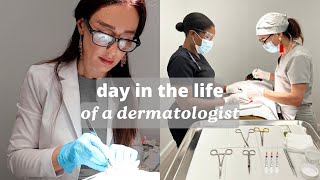
Your day as a skin specialist would likely begin by reviewing patient charts and preparing for appointments. Much of your time will be spent meeting with patients, listening to their concerns, examining their skin, and determining the best course of treatment. This could involve anything from prescribing a cream for a rash to performing a biopsy or a cosmetic procedure. You'll also update patient records, which requires careful attention to detail. Some days might include administrative tasks like managing a private practice or collaborating with other medical professionals. You might also dedicate time to research, staying up-to-date with the latest medical advancements in dermatology.
Myth vs Reality
Tap to reveal the truth behind common misconceptions
Skills You'll Need
Master these to excel in this career
Technical Skills
4Diagnostic Skills
The ability to accurately identify skin conditions through examination and tests.
Medical Software
Proficiency in using software for patient records and diagnostic tools.
Surgical Skills
The ability to perform minor surgical procedures related to skin treatments.
Research Skills
The ability to conduct and understand research related to dermatology.
Soft Skills
3Patient Communication
The ability to effectively communicate with patients about their skin conditions and treatments.
Continuous Learning
The commitment to stay updated with the latest advancements in dermatology.
Ethical Practices
Adherence to ethical guidelines in treating patients.
Domain Skills
1Dermatology
The study of the skin, its structure, functions, diseases, and treatments.
Tools of the Trade
Software and tools you'll work with daily
Hardware
Micro-current device
Uses low-level electrical currents to stimulate facial muscles for toning and lifting.
High-frequency device
Uses electrical current to produce heat and ozone, which has a germicidal effect and stimulates cell renewal.
Galvanic device
Uses a continuous direct current to introduce water-soluble products into the skin.
Microneedling device
Uses fine needles to create controlled micro-injuries in the skin, stimulating collagen production.
Radiofrequency device
Uses energy to heat the deeper layers of the skin, promoting collagen production and skin tightening.
Skincare analysis tools
Magnifying lamps and skin scanners to assess skin conditions accurately.
Software
Chemical peel solutions
Formulations of acids used to exfoliate the skin, treating issues like acne scars and pigmentation.
Client consultation forms
Digital or paper forms used to record client information, skin concerns, and treatment history.
Want to build these skills?
Get a personalized learning roadmap and save careers that match your profile.
50,000+ students already signed up
Your Learning Path
Step-by-step guide to getting started
Build Foundational Knowledge
Start by learning the basics of anatomy and physiology, focusing on the skin, head, neck, and upper torso. Understand common skin types, conditions, and diseases. Many courses offer online theory modules for this.
Master Core Facial Treatments
Get hands-on training in essential facial techniques, including client consultation, skin analysis, cleansing, steaming, extractions, masques, and face, neck, and shoulder massage. Learn to use basic facial electrics like micro-current, high frequency, and galvanic treatments.
Train in Advanced Aesthetic Techniques
Progress to specialized Level 4 training. This includes mastering chemical peels for various skin concerns, performing medical microneedling for texture and scarring, and utilizing radiofrequency for skin tightening.
Gain Practical Experience and Certification
Complete written and practical assessments under expert supervision. Practice on models to build confidence and competency. Obtain your VTCT/ITEC certification to be fully qualified to treat clients and begin your career.
Career Progression
How your career will grow over time
Skincare Technician
EntryA skincare technician works under supervision to perform basic skincare treatments and assist senior specialists.
- Perform basic facial treatments
- Assist in client consultations
- Prepare treatment rooms
- Maintain hygiene standards
Senior Skincare Technician
Mid-LevelA senior skincare technician performs advanced treatments and may oversee junior technicians.
- Perform advanced facial treatments
- Conduct client consultations
- Train junior technicians
- Maintain client records
Skin Specialist
SeniorA skin specialist performs a wide range of advanced skincare treatments and may manage a skincare clinic.
- Perform complex skincare treatments
- Develop treatment plans
- Manage client relationships
- Supervise staff
Lead Skin Specialist
LeadershipA lead skin specialist oversees multiple clinics, develops new treatment protocols, and leads a team of specialists.
- Oversee multiple clinics
- Develop new treatment protocols
- Lead a team of specialists
- Manage business operations
Education Paths
Post-Secondary Certificate/Diploma
Level 2 & 3 Diploma in Facial Skincare Treatments
Aesthetics
Post-Secondary Certificate/Diploma
Level 4 Diploma in Advanced Aesthetic Treatments
Aesthetics
Top Hiring Companies
Salary & Future Growth
What you can earn and where the industry is headed
Salary Progression (INR)
Future Career OutlookCurrent Market: Growing
The job outlook for skincare specialists is strong, with employment projected to grow much faster than the average for all occupations. This growth is driven by the increasing demand for skincare services.
Employment of skincare specialists is projected to grow 7 percent from 2024 to 2034. This sustained growth indicates a stable and expanding career field, with many job openings expected each year due to both new positions and the need to replace workers who leave the field.
The demand for skincare services is expected to continue, fueled by an aging population seeking treatments and a general increase in esthetician services. Advancements in treatments and products may also contribute to sustained demand, although the specific long-term impact of technology is still evolving.
Not sure if Dermatologist is right for you?
Talk to a Stride counsellor for personalised guidance on whether this career fits your interests, strengths, and goals.
Explore Related Careers
Similar paths you might also enjoy
Watch & Learn
Curated videos to help you explore


Helpful Resources
Articles and guides for deeper learning
Frequently Asked Questions
Quick answers to common questions
QWhat education is required to become a skincare specialist?
To become a skincare specialist, you typically need to complete a state-approved cosmetology or esthetician program and then pass a state exam for licensure. Some high schools offer vocational training, but most training comes from postsecondary vocational schools.
QWhat is the typical work environment for a skincare specialist?
Skincare specialists usually work in salons, beauty and health spas, or sometimes in medical offices. Part-time work is common, and schedules may include evenings and weekends.
QWhat are the key responsibilities of a skincare specialist?
Key responsibilities include performing facials, body treatments, and massages to improve skin health and appearance. They also remove unwanted hair, apply makeup, recommend skincare products, and advise clients on daily skincare routines.
Explore All 1,500+ Careers
Browse our full career explorer or take an assessment to get personalised recommendations.