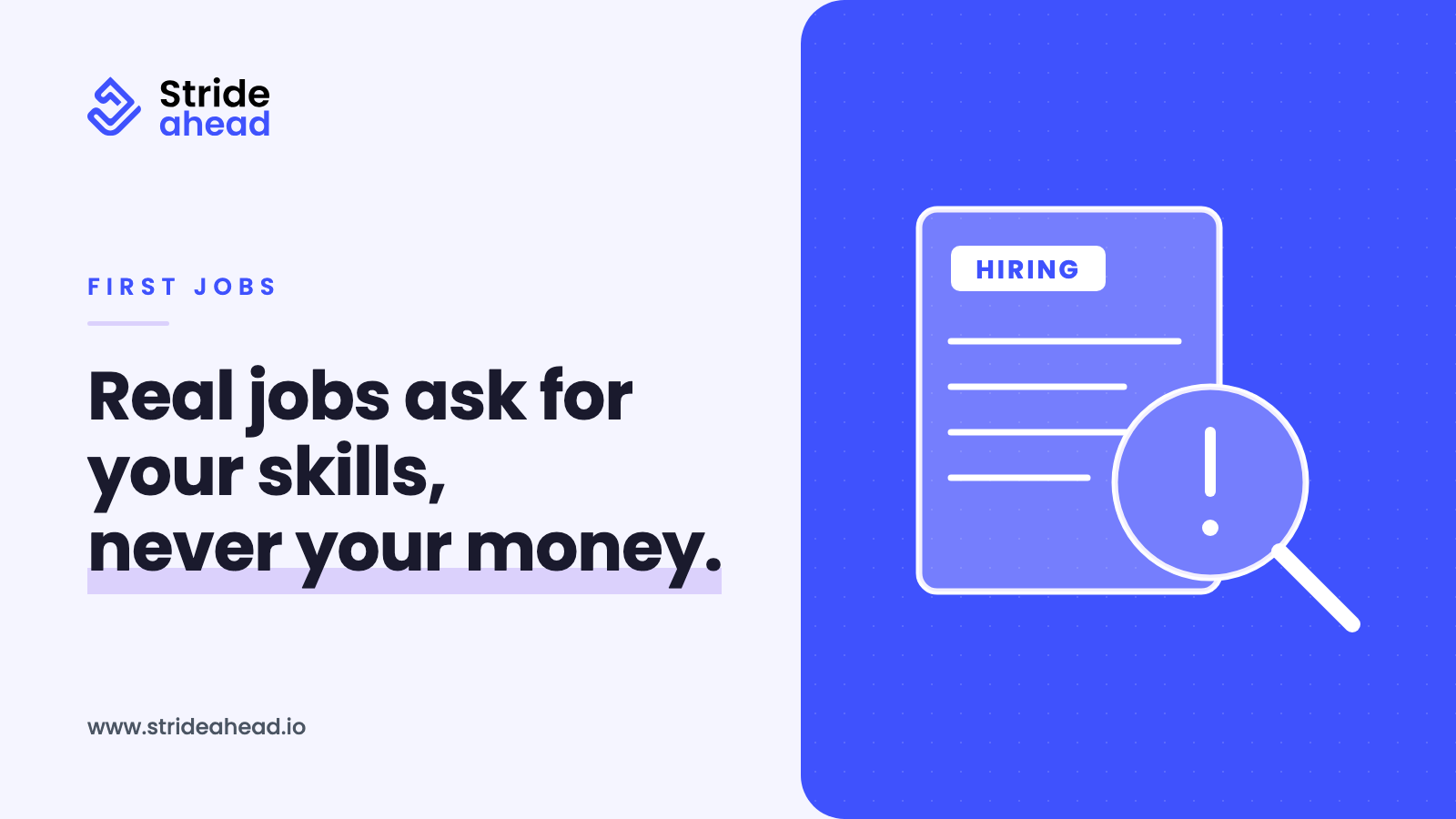
The fastest test is money. A real employer pays you. It doesn't ask you to pay for training, a starter kit, a membership or a deposit before you can begin. After that, look for pay that's too high for no experience, hiring with no real interview, a recruiter who messages you out of the blue on a chat app, and a company you can't find anywhere except the advert. If a posting asks for money, walk away. If it shows two or three of the other signs, check very carefully before you share anything.
This is in the news because of an investigation published on 12 November 2026. CBC News reported that more than 1,500 misleading postings for remote, no-experience roles had been taken down from LinkedIn and Monster after its journalists traced them to a US-based multi-level marketing company. Some promised up to US$75,000 a year. CBC put it plainly: there was no job and no salary. Applicants were steered into online information sessions and asked to pay hundreds of dollars upfront, then a monthly fee. The story drew more than 230 points and 130 comments on Hacker News.
Adverts like these read as if they were written for students and recent graduates. Remote work, no experience, no CV: to someone hunting for a first job, that sounds like a door finally opening.
What are the warning signs of a fake job posting?
The strongest sign is any request for your money. The rest are about pay that's too good, hiring that's too fast and contact that's too informal.
Australia's government scam service, Scamwatch, lists these warning signs:
- a recruiter contacts you unexpectedly by text or an encrypted messaging app
- you're promised high income from home for little effort
- there's no interview or check of your qualifications, experience or references
- you're asked to add your own money or cryptocurrency to an account to complete tasks
- the role involves moving money, making purchases or receiving packages for someone else
- you have to pay a recruitment fee or pay for training before you earn anything
CBC's investigation adds two more you can check in a minute. The companies behind the adverts had little or no presence online, and close to 1,500 postings carried almost identical job descriptions. Many asked for no education, no experience and often no CV at all.
Can a fake job appear on LinkedIn or a big job site?
Yes. Scamwatch says scammers post fake adverts on legitimate platforms, so where you saw an advert proves nothing about whether it's real.
The CBC journalists found these postings in their own feeds and in job recommendation emails from LinkedIn. Both platforms ban misleading postings and removed these ones, LinkedIn close to 900 and Monster 600. But removal came after an investigation, and people had been applying all along. Treat a big platform as a noticeboard, not a guarantee.
Is an MLM "opportunity" the same as a job?
No. If you pay to join and earn by selling or by recruiting other people, you're buying into a business, not being hired.
That distinction was hidden in the CBC case. The postings never mentioned the MLM company or any sign-up fee. The information sessions CBC attended covered travel booking only, said nothing about earning from recruits, and didn't mention an annual fee written into the contract. MLMs aren't illegal in the US or Canada, as CBC notes, but the US Federal Trade Commission is blunt about the economics: "Most people who join legitimate MLMs make little or no money. Some of them lose money." That's from its consumer guidance on multi-level marketing.
If someone asks you to "invest in yourself" before your first shift, you're not being interviewed. You're being sold to.
What is a task scam?
A task scam pays you small amounts to rate or "like" things online, then asks you to deposit your own money to reach bigger earnings that never arrive.
It looks more like a game than a job, and it has grown fast. The FTC's December 2024 data spotlight found that about 20,000 people reported task scams in the first half of 2024, compared with about 5,000 in all of 2023. Reported losses to job scams overall more than tripled from 2020 to 2023 and topped US$220 million in the first half of 2024 alone. Those are only the people in the US who reported it. The FTC's advice fits on a sticky note: "Never pay anyone to get paid."
How do I check whether a company and a recruiter are real?
Find the company yourself, separately from the advert, and contact it through details you looked up.
Search the company's name with words like "scam", "review" or "complaint", as the FTC's job scams guidance suggests. Check whether the role appears on the company's own careers page. If a recruitment agency approached you, ring it on a number you found yourself, not the one in the message.
Notice what the process asks of you. A genuine employer wants to know about your skills, even for a first job. It asks questions, sets a task or holds an interview, and it pays you. A scam wants your attention, your personal details and eventually your money, and it's happy to skip the part where anyone checks whether you can do the work.
Be careful with documents too. Scamwatch suggests leaving your home address and date of birth off your CV, and sharing your passport or ID only with an employer or recruiter you're certain is genuine.
What should I do if I've already paid or shared my details?
Stop paying, contact your bank or payment service straight away, and report it.
The FTC says to contact the company you used to send the money, report the fraud and ask whether the payment can be reversed. Report the advert to the platform where you found it, and to the fraud reporting service where you live: in the US that's ReportFraud.ftc.gov, and in Australia it's Scamwatch. If you shared ID documents, tell your bank and keep an eye on your accounts.
And don't be hard on yourself. These adverts are written by people who do this all day, and they target the hope that a first job brings. The FTC also suggests describing any offer to someone you trust before you act on it. Saying it out loud often shows you what's wrong.
What should I do before I apply anywhere this week?
Before you click apply, answer three questions about each posting. Who is the employer, and can I find it without using the advert? What will they assess me on? Who pays whom, and when? If you can't answer the first, or the answer to the last is "I pay them first", move on.
Keep a short list of the places you applied and who replied, so an unexpected "you've been selected" message from a job you don't remember stands out. Keep your search on employer sites and careers services you trust, and be wary of any conversation that moves quickly to WhatsApp or Telegram.
How do you know what a real entry-level job asks for?
The best scam filter is knowing what genuine roles in your field look for, so an advert that asks for nothing stands out at once. If you're in Grade 11 or beyond, at college, or hunting for a first job, the Stride Ahead Skill Gap Index compares your skills with what the role you want demands. Use it to see where you stand, then put your time into the applications that are real.
Sources
- CBC News, LinkedIn, Monster take down over 1,000 fake job postings after CBC investigation, 12 November 2026.
- Hacker News, discussion of the CBC investigation, 14 November 2026; audience attention.
- Scamwatch (National Anti-Scam Centre, Australia), Jobs and employment scams, accessed 15 November 2026.
- US Federal Trade Commission, Paying to get paid: gamified job scams drive record losses, Data Spotlight, 12 December 2024.
- US Federal Trade Commission, Job scams, consumer advice, March 2023.
- US Federal Trade Commission, Multi-level marketing businesses and pyramid schemes, consumer advice, July 2022.